
Stripped of federal climate change protections, an Alaskan village fights for its future
Confronting rising seas, melting ice and furious storms, residents must make difficult decisions.
Rayna Paul was awake in the early morning hours of October 12, 2025. A lifelong resident and the environmental director of Kipnuk, a remote village in western Alaska, she knew the storm was a big one.
Paul’s walls began to shake. When the window shattered, she decided it was time to leave. She woke her brother and his children, urging them to pack what they could and hustling them onto her ATV.
“I’m so glad they listened to me, because I wouldn't have budged if they didn’t,” Paul recalled. “I told them: ‘I’ll stay with you, if I have to.’”
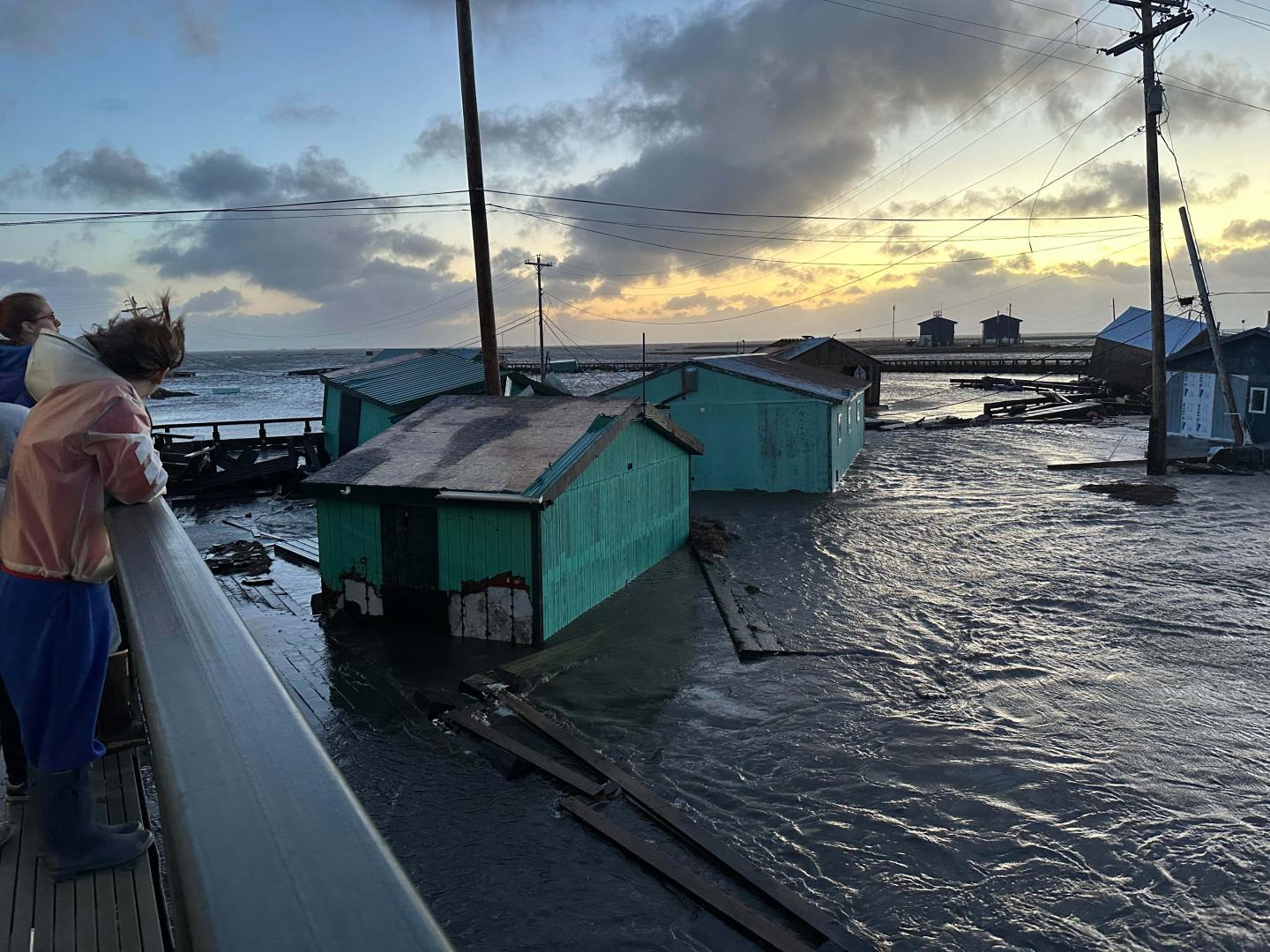
Debris whirled around her as Paul squinted through ski goggles, navigating her four-wheeler around flooded boardwalks — the small village has no asphalt roads — to the school.
The small K-12 school was the only village building set high on pilings, safely above the rising floodwater. Getting there in time protected Paul, her brother and his children from the worst of the storm — but not everyone in Kipnuk made it to the school.
“We were hit really bad,” Paul said.
Worse than other storms
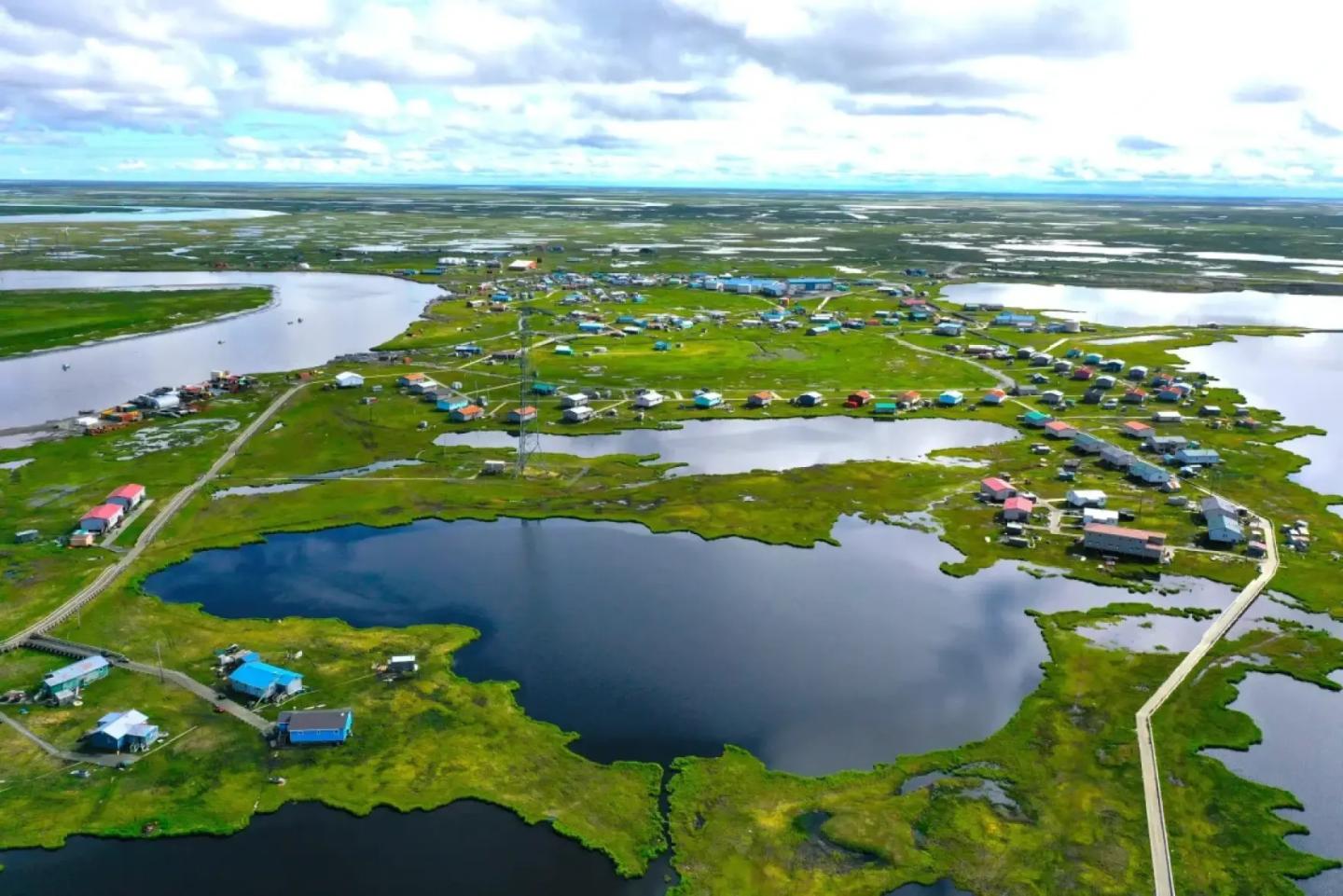
Climate change is warming the Pacific Ocean, creating more water vapor that adds fuel to storms like Typhoon Halong, the remnants of which bore down on western Alaska in October. Climate change is also heating up the Arctic, which means sea ice, a natural storm barrier, doesn’t form off Alaska’s coast until much later in the fall. The permafrost is melting fast, hastening the erosion of the riverbank on which Kipnuk rests, bringing homes and boardwalks closer to the Kugkaktlik River.
In these altered conditions, Halong delivered hurricane-force winds and a storm surge far worse than the residents of Kipnuk — 974 people, according to Paul — had ever seen.
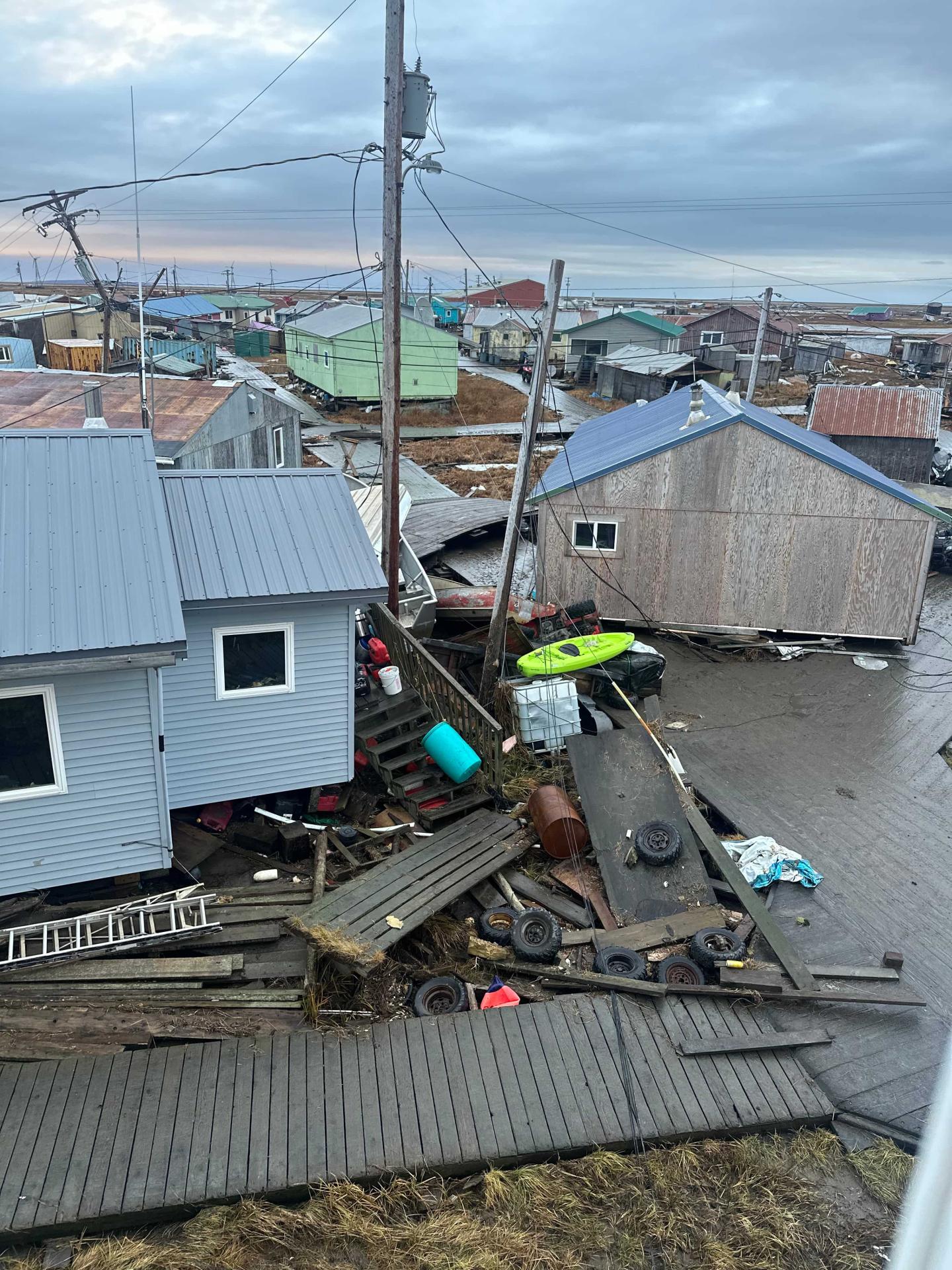
The night of the storm, floodwater rose so quickly that it tore houses off foundations and carried them away with people trapped inside. Through the night, with her phone battery fading, Paul fielded panicked calls and texts from friends and family while trying to coordinate emergency rescues with state and federal agencies. Even the Coast Guard was grounded until winds eased.
When the storm calmed the next morning, rescuers would find the village in ruins: Roughly 90% of Kipnuk was destroyed. People’s homes — including Paul’s — were tossed across the muddy ground. Boardwalks were decimated. Broken pipes and containers spilled fuel, cooking oil and raw sewage into the river and soil.
Incredibly, everyone from Kipnuk survived. In the neighboring village of Kwigillingok — about 30 miles away — one person was dead and two remained missing, as of November reports.
Environmental news that matters, straight to your inbox
Raising the alarm
One of dozens of remote Indigenous villages on Alaska’s western coast, Kipnuk has for years joined other rural Alaskan communities in raising the alarm about worsening floods and melting permafrost threatening their survival.
Government officials have also recognized the existential climate threats facing Kipnuk and other Alaska Native villages, but critics say they have been too slow to act.
Over a year before Kipnuk and other villages were hit by Halong’s destruction, a 2024 state report identified 144 Alaska Native communities — Kipnuk among them — whose infrastructure was imperiled by climate change, and found government agencies had not delivered the funding, resources and coordination required to protect them.
In 2024, as Kipnuk’s environmental director, Paul led the effort to secure $20 million from the Biden administration to begin fixing the problem. The long-awaited funding would have paid for the construction of a rock retaining wall to stabilize the riverbank and protect against floods; the relocation of critical infrastructure inland; and equipment to help the community clean up after storms.
In May 2025, however, mere months before the typhoon, the Trump administration canceled the grant without warning, citing the previous administration’s “radical agenda of wasteful DEI programs.”
Kipnuk's grant came from $3 billion appropriated by the U.S. Congress to the Environmental and Climate Justice Community Change Grant program, which was created by the Inflation Reduction Act. In June, Kipnuk joined other communities in a lawsuit against the Trump administration for canceling the program.
A few days before the storm struck Alaska, the U.S. Environmental Protection Agency emailed communities who received the grants and asked them to formally “close out” the awards — which would forfeit their right to legally challenge the administration over the grant terminations. This would also prevent communities from accessing the promised funds in the future, if legal challenges succeed in overturning the administration’s actions.
While clawing back resilience dollars from communities hit first and worst by climate change, advocates note that the Trump administration is simultaneously catering to the worst polluters responsible for warming the planet, rolling back wetland protections, defunding clean energy projects and scrubbing public climate data. EPA Administrator Lee Zeldin is expected to finalize his proposal to repeal the EPA’s Endangerment Finding — the agency’s bedrock protection against planet-warming pollution — as soon as this month.
- New Trump EPA proposal would strip wetland protection
- 5 ways the Trump administration has rewarded the biggest polluters
A history of displacement
“Indigenous communities throughout North America have been displaced and pushed into the most vulnerable areas of our environments, with few options and investments to move or to protect our communities in the long term,” said Devon Parfait, chief of the Grand Caillou/Dulac band of Biloxi Chitimacha Choctaw and coastal resilience analyst at Environmental Defense Fund. “Now, in the era of climate change, we are the most vulnerable to its impacts.”
Indeed, for millennia before the United States was founded, the Indigenous Yup’ik peoples of southwestern Alaska traversed the lush tundra and tidal wetlands of the Yukon-Kuskokwim River Delta. The Yup’ik followed a semi-nomadic lifestyle as they pursued the hunt and the harvest according to the seasons.
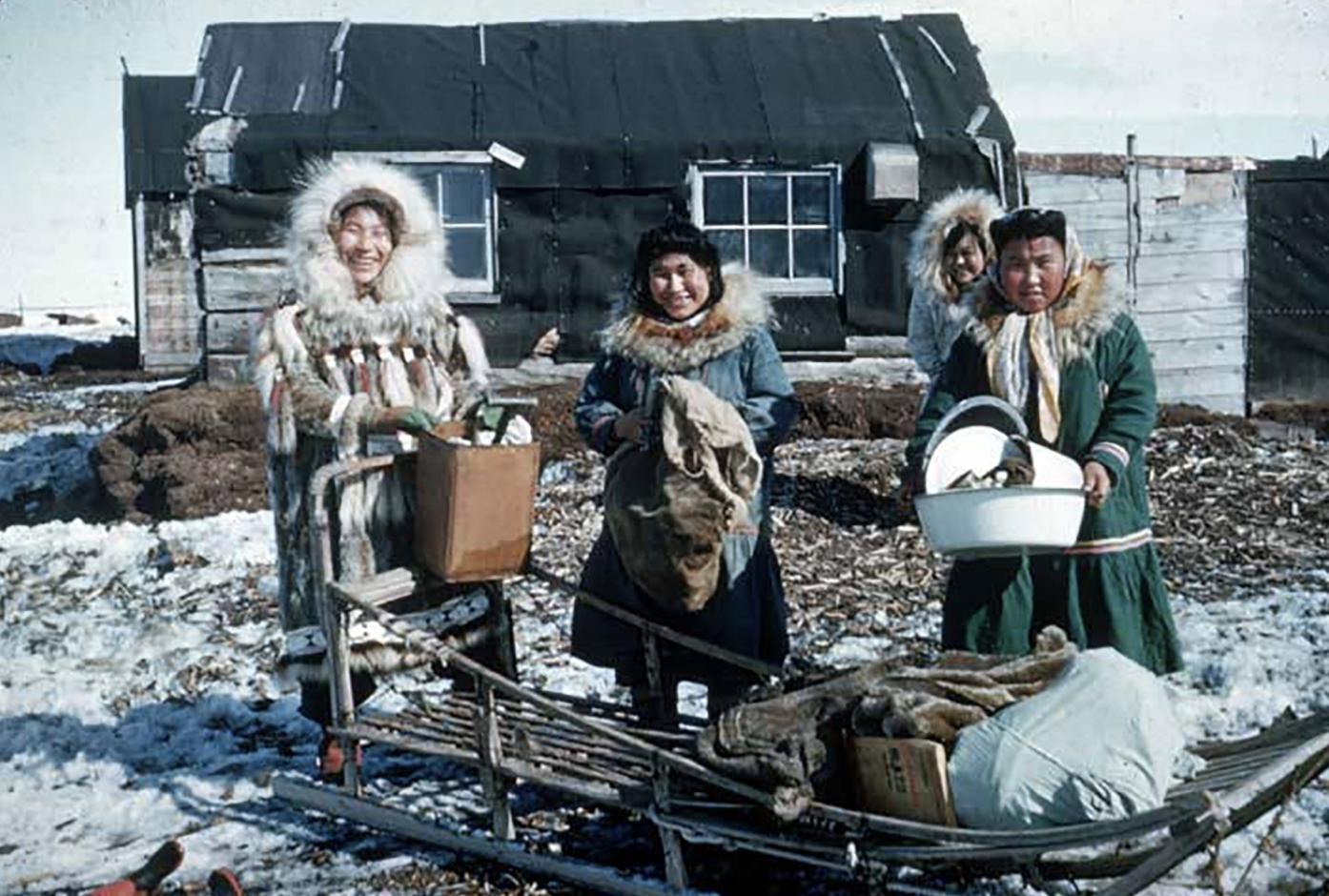
It wasn’t until the 20th century, when the U.S. government built Indian day schools across the remote region, that many Indigenous families were forced to abandon their semi-nomadic way of life.
For decades, federal policy required Native American children attend a government school to erase their cultural identities and “assimilate” them. Children as young as four were forced from their homes and sent away to brutal Indian boarding schools. Hundreds of children died at those schools, many buried in unmarked graves.
To keep their children close, many Yup’ik parents chose to settle permanently where their children could attend an Indian day school — in villages like Kipnuk.
Many residents of Kipnuk still speak Yup’ik as their first language. There are no roads in or out. Most people get around by snowmobile, dog sled, ATV or motorboat. In the summer, barges timed around seasonal ice formation deliver supplies, fuel and equipment up the Kuskokwim River from Bethel, the nearest town.
Kipnuk remains a subsistence community. When Halong hit, residents were preparing for the bearded seal hunt. Alongside the wrecked homes, storm waters also washed away freezers stocked with fish and meat for the Alaskan winter.
Rayna Paul Environmental director for KipnukI feel for the next generation. I don’t want them to live an unlivable life.
To relocate, or rebuild
Halong’s destruction has turned nearly 2,000 people from western Alaska’s Indigenous villages into climate refugees.
Scattered across hotels and other temporary housing in Anchorage, the residents of Kipnuk face an enormous decision: Whether to rebuild their village or relocate it.
The clock is ticking.
“They need immediate relocation if that's what they choose, or immediate rebuilding as quickly as possible because they're a subsistence-based community,” explained Sheryl Musgrove, Alaska climate justice program director at the Alaska Institute for Justice. “They can't survive long-term in Anchorage. It may destroy their community, if it takes too long.”
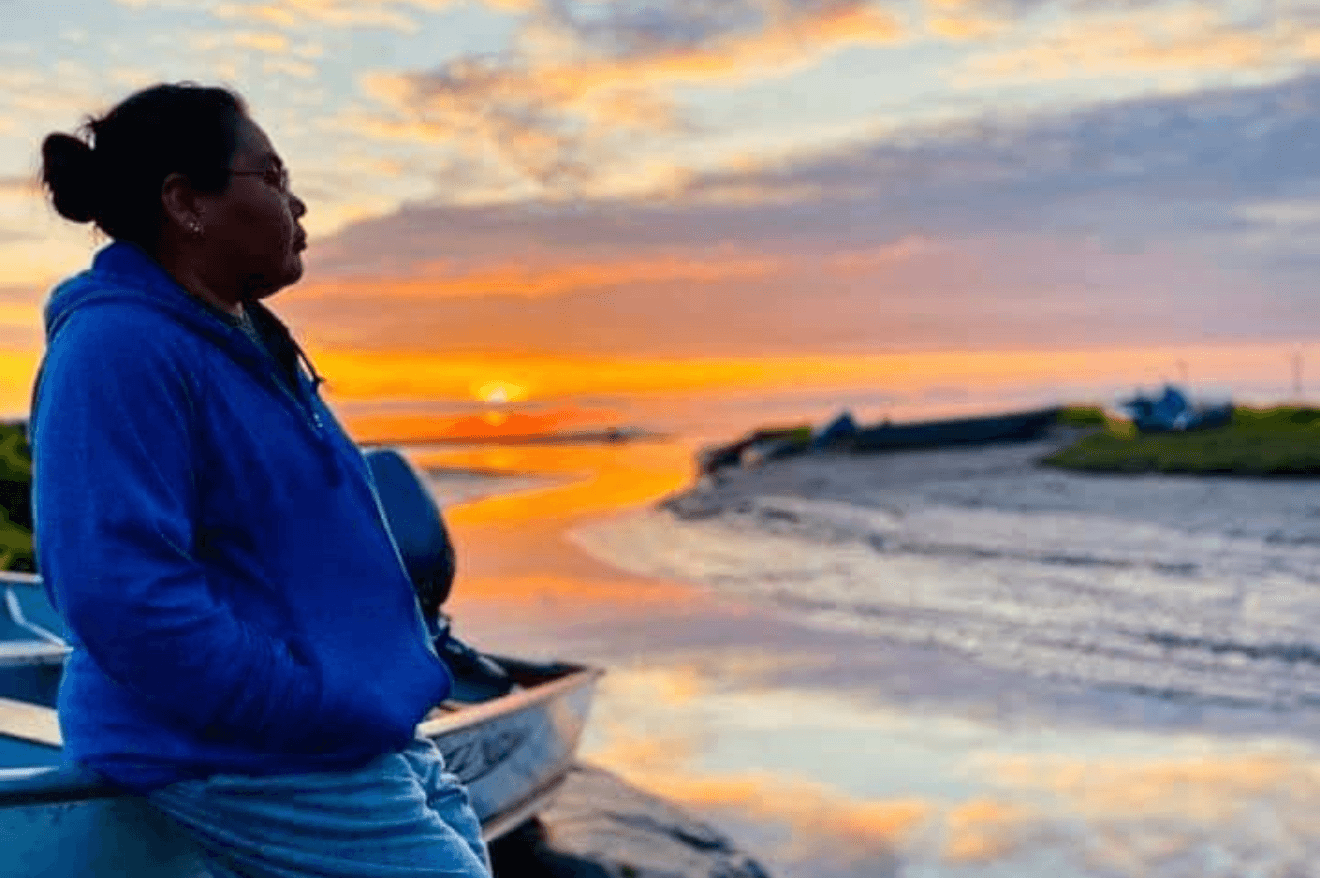
The situation is “starting to feel scary,” Paul said. “I feel for the next generation. I don’t want them to live an unlivable life.”
No easy answers
“There is a sentiment out there, that we should just move away from the problem,” Parfait said, but for one thing, this ignores many Indigenous communities' deep ties to the land. "Our ancestors are buried here,” Parfait noted.
Native American communities have a long history of being forced away from their traditional territory, Parfait added, and communities being pushed to leave their land can evoke that dark history.
Pragmatically speaking, moreover, relocating a whole community is incredibly complex — and costly.
The only Alaska Native village to relocate to escape the worsening flooding and erosion in the region, Newtok, spent over $150 million and took over 20 years to plan and complete a move nine miles inland.
The community’s relocation is seen by many as a failure, with critics pointing to government agencies’ mismanagement of the project, as well as their failure to grapple with the unique cultural needs of the community and harsh conditions of the region. Many residents of the new village live in rapidly deteriorating homes, lack promised indoor plumbing and suffer through frequent power and heating outages.
It can be more “efficient and impactful to use the dollars smartly and plan on adaptation,” Parfait said. “We must recognize that our world is not static, and is ever-changing, and our infrastructure must adapt to that reality.”
For Kipnuk, there are no easy answers, and as of yet, no consensus. Some villagers wish to relocate to higher ground, safely out of reach from a future Halong, as soon as possible, while others are passionate about rebuilding in place, adapting infrastructure to better withstand the storms. Ultimately, the decision rests with the community.
“I love our community”
While Kipnuk weighs this choice, one thing remains clear: This close-knit community will continue to fight for its future — no matter what climate change, or the Trump administration, tries to take away.
“I love our community,” Paul said. “We have really good people. We have really good elders. Our elders teach us a lot. I know it's very remote, but I grew up there.”
“It's a good place to grow up,” she added.