
Arizona residents win long-sought water protections
La Paz County, Arizona, is one of the drier places in a pretty dry state. With just a scant few inches of rain a year, a shrinking supply of water from the Colorado River, and a climate that keeps getting hotter and drier, it seems an unlikely spot to set up a water-intensive alfalfa farm.
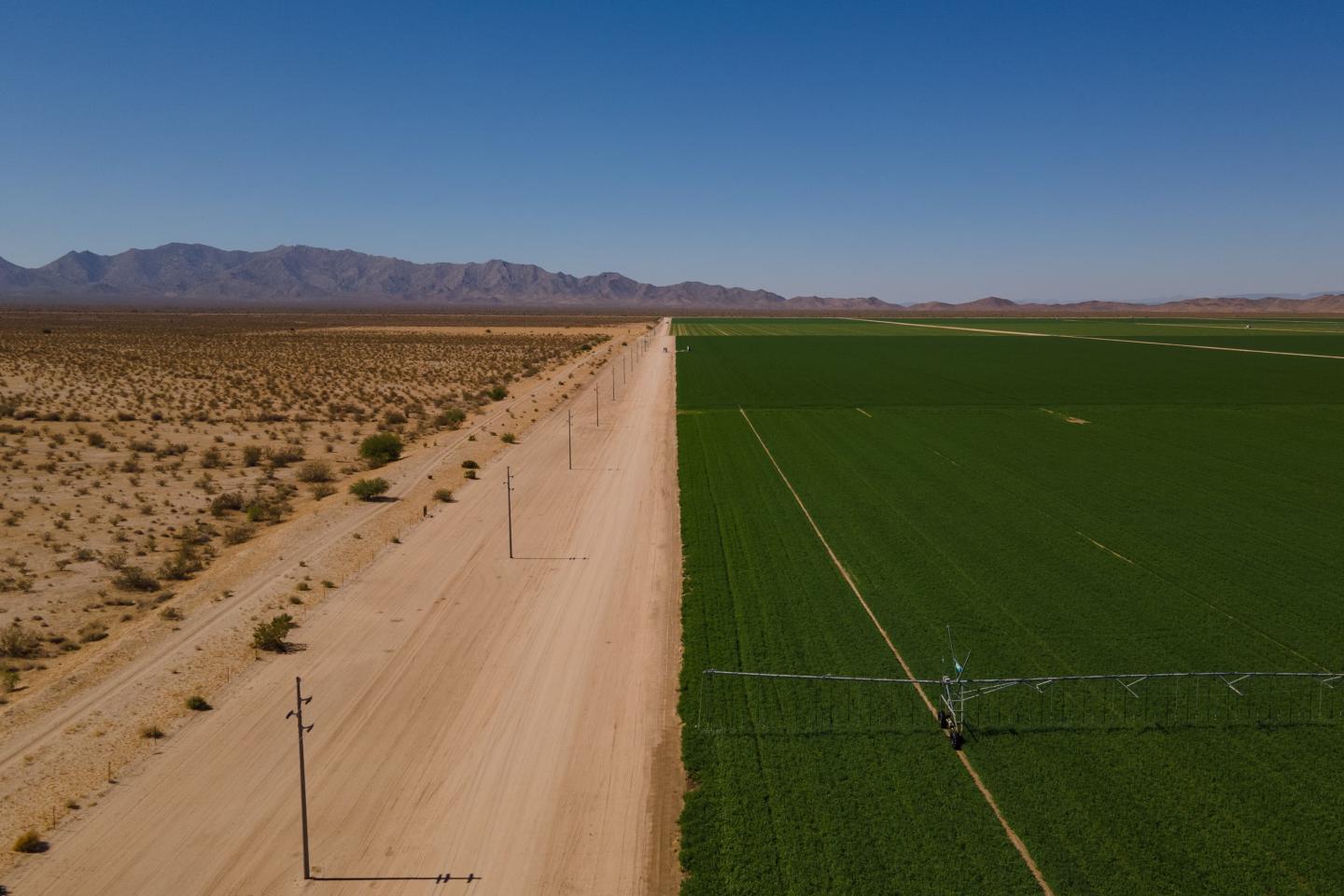
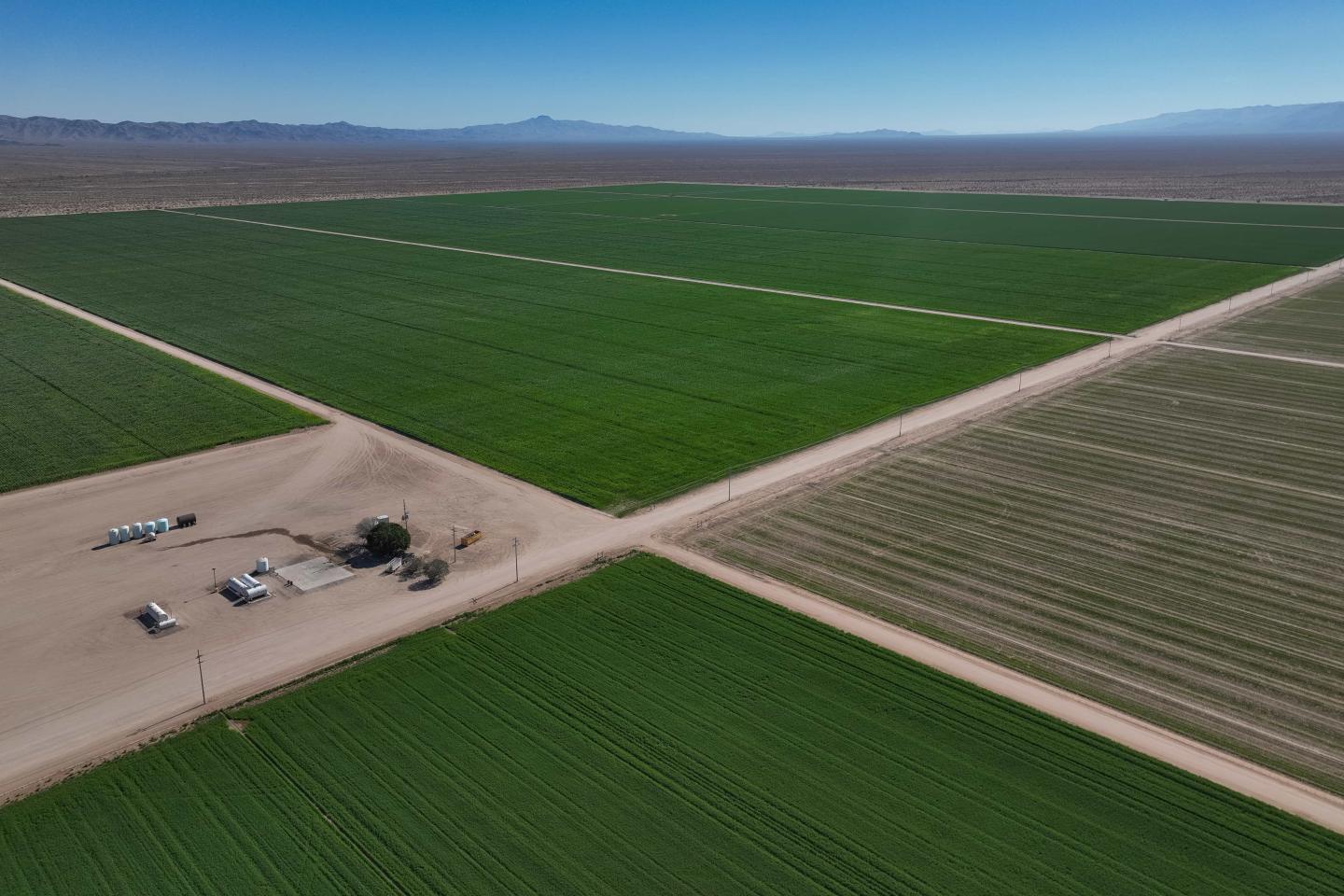
Yet this is where Fondomonte Arizona, a Saudi-owned company, purchased nearly 10,000 acres of land in 2014 to cultivate alfalfa, which it then shipped back to feed cattle in Saudi Arabia. What did Arizona provide that the desert kingdom did not? Free access to underground water reserves for anyone, limited only by how many wells you could afford to drill, and how deep you could afford to dig them.
For Fondomonte, this wasn’t much of a limit at all. In 2023 alone, the company extracted more than 31,000 acre-feet of groundwater.
But for the Fellowship Bible Church up the road, the limits hit fast soon after Fondomonte expanded its operations. By 2017, the church's well had run dry. No water in the taps. No collection-plate miracle that could produce the $20,000 needed to dig a deeper well. Congregants now haul in water donated by Fondomonte to keep the church going — an arrangement antithetical to the independence that rural Arizona communities value so deeply.
This January, however, La Paz residents did achieve something close to a miracle: the first groundwater protections for the Ranegras Basin, which holds the water being pumped by Fondomonte and thousands of residents in La Paz and neighboring Yuma County. Ranegras is the third region in Arizona to receive new protections for local groundwater supplies in the last four years, after more than 40 long years of state inaction. And while Arizona’s water issues are far from resolved, change is in the air.
The battle for groundwater
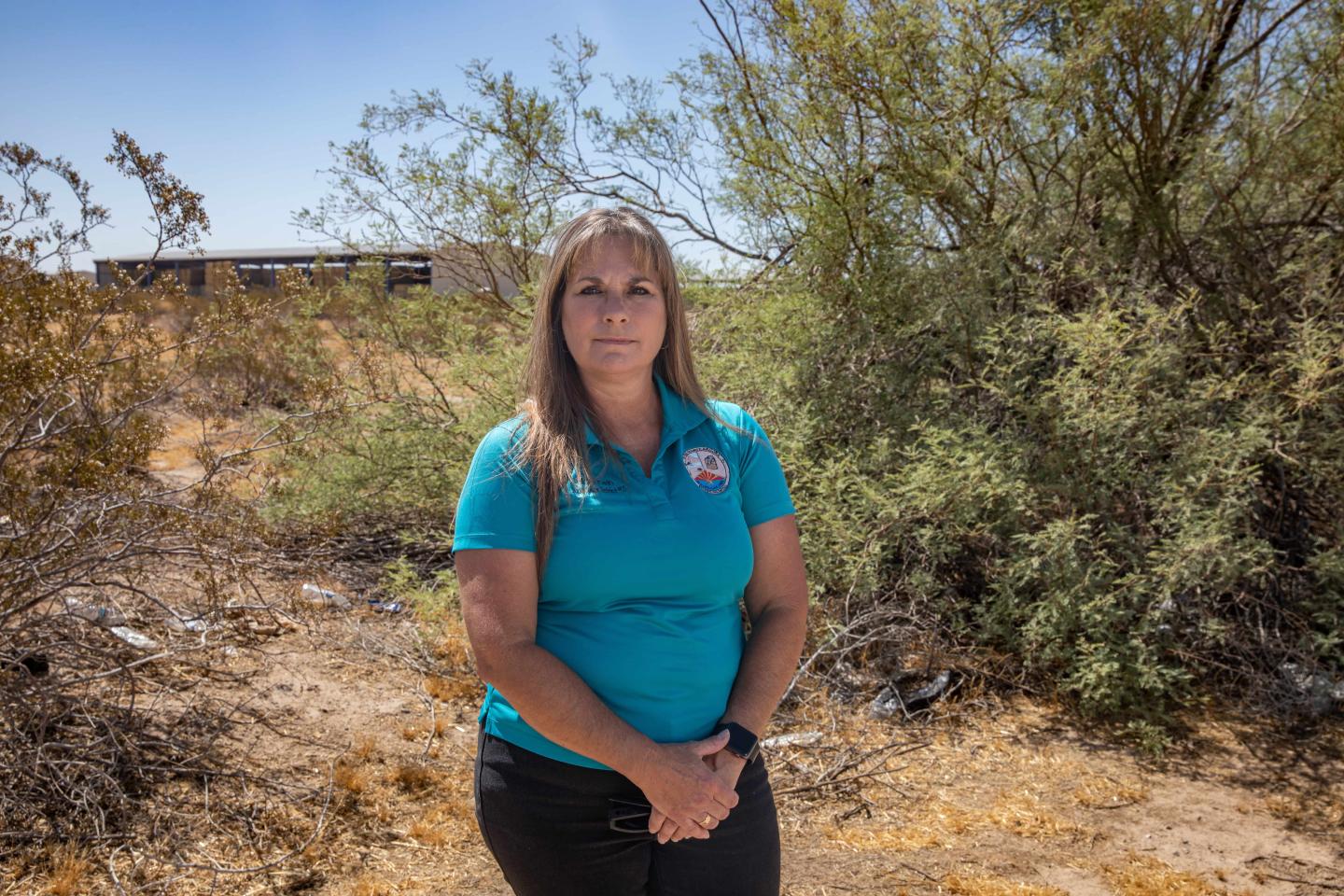
“If you’re just getting into water issues here, you’re going to have to catch up,” explains Holly Irwin, a district supervisor for La Paz County. “Everybody’s looking for water.”
Here’s the situation: Many residents of Arizona’s rural counties get most, if not all, of their water from wells that tap into groundwater — ancient, underground reserves of water created over millennia by water seeping into rock.
This groundwater is the lifeblood of Arizona, providing more than 40 percent of all the water used in the state — even more than is supplied by the beleaguered Colorado River, water which is unhappily shared between seven increasingly dry western states.
That groundwater is being extracted far faster than it can ever be replenished. In 1980, Arizona passed a groundbreaking state law to manage groundwater extraction around its major population centers. But 80% of Arizona remained a free-for-all, with no limits on pumping groundwater, despite it being the primary water source for many rural residents and businesses.
“There’s about 1.3 million people in Arizona living in areas that are fully or highly dependent on groundwater — with zero protection,” says Arizona water advocate Chris Kuzdas of the nonprofit Environmental Defense Fund.
When big, industrial operations like Fondomonte started moving into rural counties, drilling deeper and deeper, the cracks started to show — literally. Land started collapsing around over-pumped areas, creating rifts and buckles that fractured buildings and well casings.
As their wells ran dry, La Paz County residents reached out to Irwin with their concerns. One couple told her they had to choose between investing in new, deeper wells, or moving.
“They ended up moving,” says Irwin. “That’s something that’s just heartbreaking for me.”
Environmental news that matters, straight to your inbox
A decade of advocacy
Deeply worried about the future of her county, Irwin took her concerns about groundwater to the state legislature. She met with lawmakers, testified at hearings and wrote op-eds, to no avail. She collected 500 signatures on a petition asking lawmakers for local groundwater protections and hand-delivered it in 2018 to then-governor Doug Ducey.
“I got crickets,” says Irwin. “Nothing happened.”
In 2023, she tried again, delivering the same petition to Arizona’s new governor, Katie Hobbs. By this time, Irwin was a leader in the growing, bipartisan Rural Water Working Group, a group of local elected officials and community advocates that was shaking up the state’s indifference to protecting water for rural communities.
This time, her petition got results.
“I never expected I would see anything like this,” says Irwin.
That year, Hobbs canceled one of Fondomonte’s leases on state land in La Paz County and said the state would not renew three others. By early 2024, the company had stopped irrigating all four leased properties, according to the governor’s office.
Then, Arizona Attorney General Kris Mayes filed a nuisance lawsuit against Fondomonte, seeking a court order to stop the excessive pumping on the land it owns and establish a fund to address the damages caused. According to the lawsuit, in a single year, Fondomonte used 81% of all the water pumped from the Ranegras Basin.
In 2025, the Arizona Department of Water Resources held a public meeting to inquire if the state should consider a management plan for groundwater from the Ranegras Basin. Water was being extracted at nearly 10 times the rate that nature could replenish it, said ADWR.
The response was overwhelmingly in favor of a plan — out of about 400 comments received during the formal comment period, roughly three-quarters supported new groundwater protections.
Finally, in January 2026, ADWR established water protections for the Ranegras Basin that block agricultural expansion and require major water users to monitor and conserve groundwater. The details of the local groundwater management plan will be worked out through an extensive community engagement process. The Ranegras Basin protections are the second such designation made during Hobbs’ time in office. It’s the fourth protected area created in just the past three years.
Kuzdas, who supports communities across rural Arizona in their efforts to shape water policies that affect them, says, “The acceleration we are seeing after 40 years of nothing speaks to the direction communities want to go: choice and self-determination over their future. That means protecting groundwater supplies now and for future generations.”
- In the Wild West of water, residents set politics aside to protect their future
- Texas voters say yes to $20 billion water fund
What’s next for Arizona groundwater
For Irwin, the battle is far from over. Ranegras is just one of five basins that hold groundwater supplies for La Paz County.
“Getting the one basin protected validates all the blood, sweat and tears for a decade,” says Irwin. “But with groundwater, the work will never be done.”
Just days after the Ranegras announcement, Arizona’s legislature introduced a bill that would allow a New York City hedge fund, Water Asset Management, which purchased 13,000 acres in La Paz in 2024, to pump water out of another local basin and sell it to the fast-growing Phoenix suburbs.
Irwin, down with the flu, had to cancel her plans to testify in person against the bill. But she had her statement read into the record, in which she emphasized the devastating effect the legislation would have on her community’s ability to survive — let alone grow — in the future.
“It’s not morally right to take from our community just because urban areas overbuilt,” Irwin says. “Groundwater is our livelihood; we need it to survive. We have a right to grow just like anyone else.”
Irwin continues to be a leading voice on water protection for her community. “I work for the people who blessed me with this office,” she says. “I’m going to fight to protect what I can, for as long as I can.”