
From collapse to comeback: How a Mexican fishery charted a new course
Irma Cervantes still remembers when the Gulf of California stopped being generous.
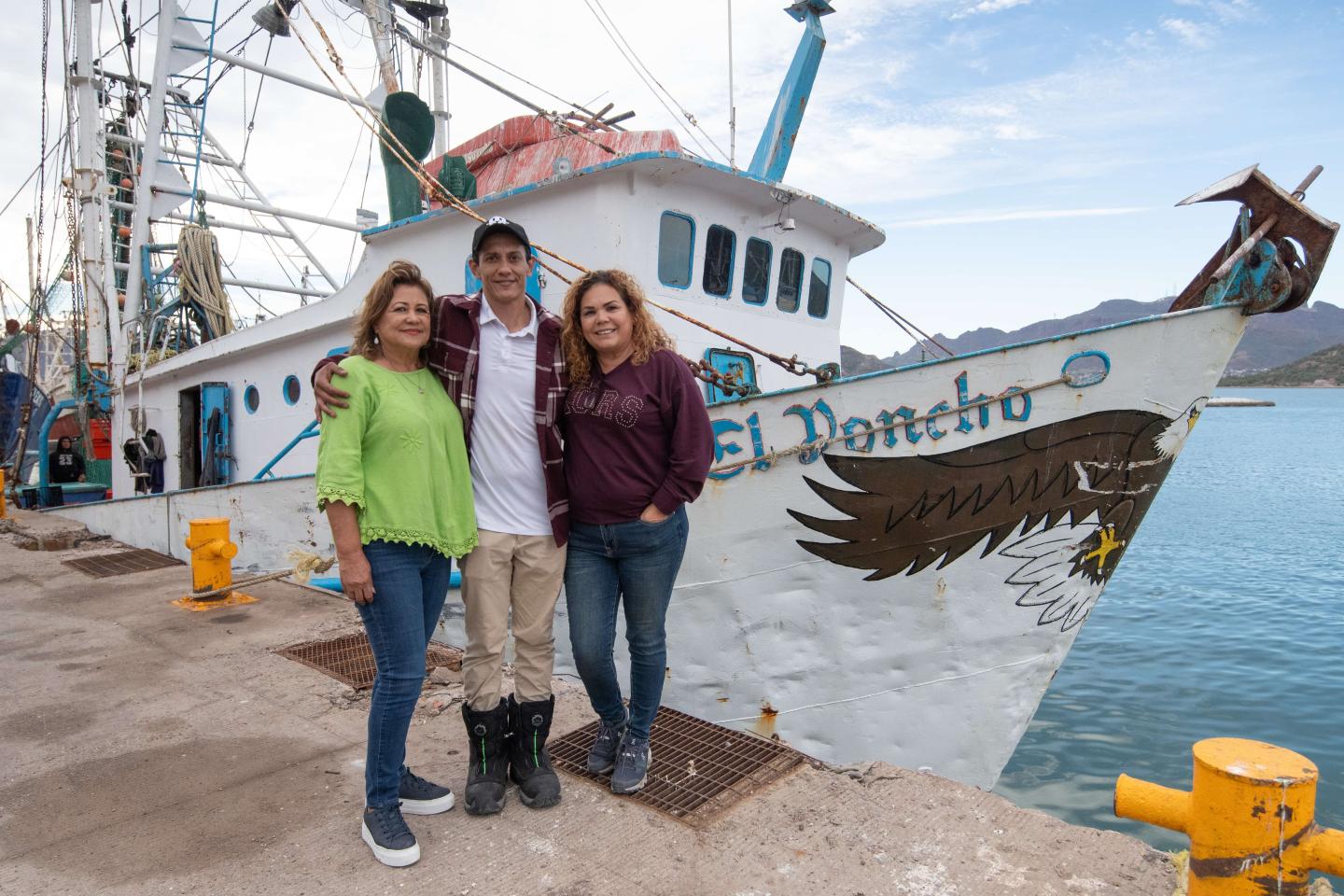
Cervantes grew up in Guaymas, Sonora, a busy port in Mexico where shrimp boats lined the docks and the fishing industry set the rhythm of life. Boats returned to port heavy and hopeful. Processing plants hummed.
Her family’s company, FRUMAR, expanded and planned the future around the next season. Guaymas, like so many port cities along the Sonora coast, pulsed with the promise of work and wealth.
But by the early 2010s, after years of falling productivity, ports like Guaymas were scrambling for a viable future. Overfishing, warming waters, rising fuel costs and a flood of low-cost farmed shrimp pushed the Gulf shrimp fishery into economic crisis.
“We killed the goose that laid the golden eggs,” says Cervantes, now CEO of FRUMAR, which runs five boats and a fish-processing plant.
Cervantes and others struggled to find alternatives. Some discovered an answer swimming in the gulf’s deeper and colder water. Hake, a silvery whitefish, had long gone largely unexploited. As fishermen refitted boats and turned their nets toward the new target, the docks again filled with hope.
But that optimism was tempered by memories of how quickly a fishery could unravel when harvests outpaced what nature could replace.
Rather than rushing to pull as much hake as possible out of the sea, the region’s fishing leaders reached out to scientists, policymakers and nongovernmental organizations with experience in building sustainable fisheries.
“We had seen Environmental Defense Fund’s work on fisheries in the region,” says Cervantes, “and we wanted to know what we could learn from them. How could we reshape the industry to do things right, to manage the resource sustainably? How could we fish without repeating the same mistakes?”
Environmental news that matters, straight to your inbox
Reinventing the fleet
What followed was a collaboration in pursuit of a shared goal: to build a fishery sustainably. If it worked, the transition to hake could become a model — not just for the Gulf of California, but for any region trying to escape the boom-and-bust trap of overfishing.
The first challenge was technical. Shrimp boats weren't designed to harvest finfish like hake, so experts helped develop adaptations that allowed shrimp boats to catch hake in a hygienic way that protected the harvested fish from damage.
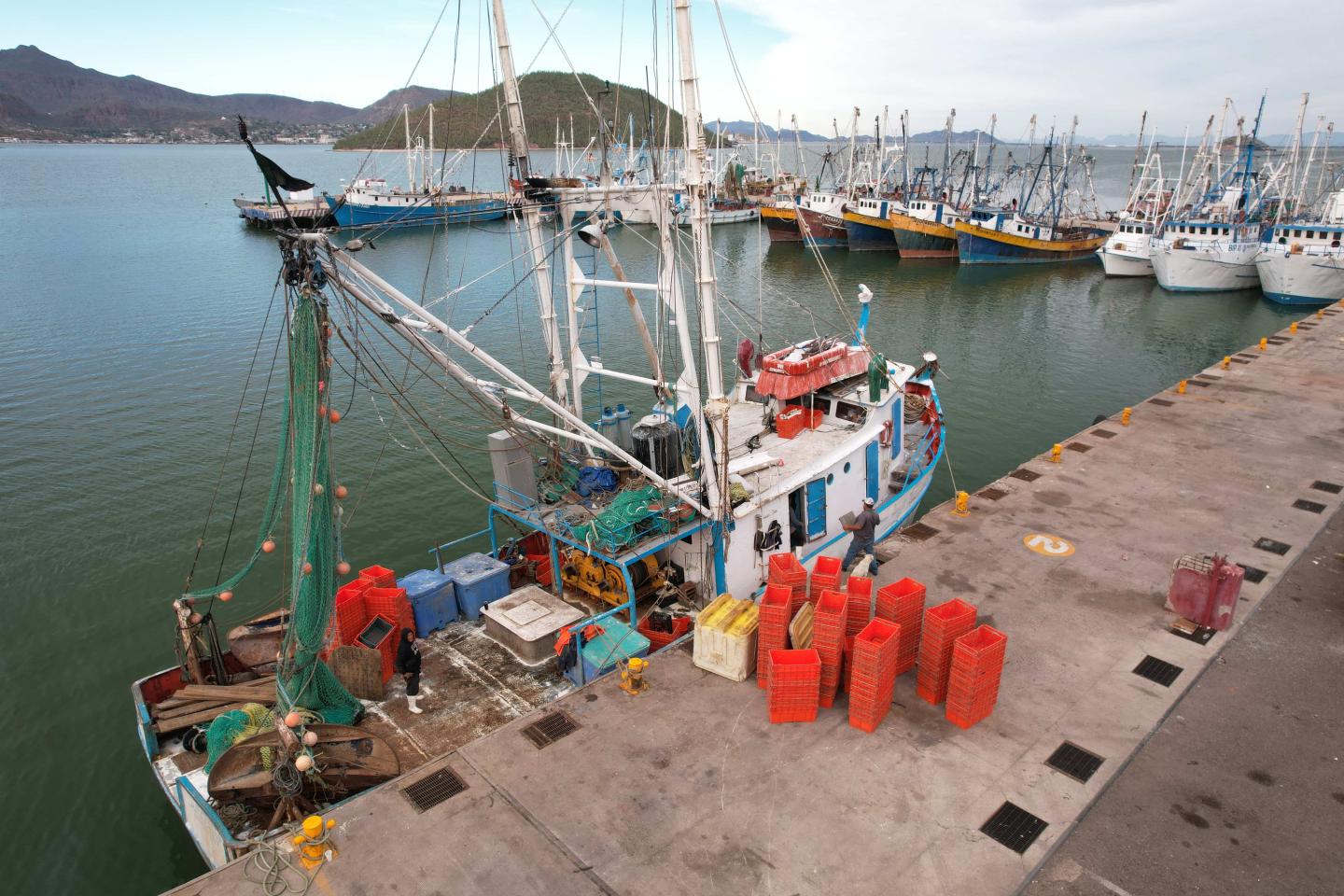
Fishermen were able to boost profit margins by reducing trawling times, leading to fewer fish bruised in nets and less fuel consumption. Smaller bins in holds led to less fish compression under layers of ice. Crews were trained to ice and pre-cool fish immediately, protecting a species prized for its delicate flesh.
Some captains outfitted their boats with a single net at the stern sized and shaped to easily empty the fish into a specially designed ramp that allows the fish to slide aboard gently. Below deck, the fish go straight into a sterile hold, where stainless steel processing tables have replaced wood.
“Doing it this way, the fish is less damaged, the quality is higher and they can sell it for a better price,” explains Environmental Defense Fund's Juan Quimbar. “They profit by moving from quantity to quality.”
Juan Quimbar Environmental Defense FundThe lesson of shrimp hasn’t been forgotten. It’s been transformed into a shared purpose to build a fishery that lasts.
Science, surveillance and social impact
For the fishery to remain sustainable, the fishermen needed to understand the size of the hake population in the gulf, its reproductive patterns and ecosystem health. Science quickly became the backbone of the decision-making process, as fishermen worked to develop a management strategy based on real data.
“We financed a program beginning in 2015 with observers aboard the boats,” says Gilberto Márquez, CEO of the fishing company Pesquera Gilmasa. “These biologists and technical specialists went out with the crews and they began to record the captures and bycatch [fish or marine animals caught unintentionally]. We needed good data about the stocks, because when we don’t know what’s inside the sea, we can come to believe that the supply is infinite and that it will never end.”
Most fishing companies still run only one or two boats, but as crews refitted their gear and turned to hake, landings surged. For years, annual catches stayed below about 7,000 tons. Then the shift accelerated. After hake was formally recognized as a national fishery in 2018, the fleet grew from fewer than 20 boats to more than 80. By 2022, catches had jumped to roughly 17,000 tons, and by 2024 they were approaching 26,000 — cementing hake as a new economic engine along the Gulf.
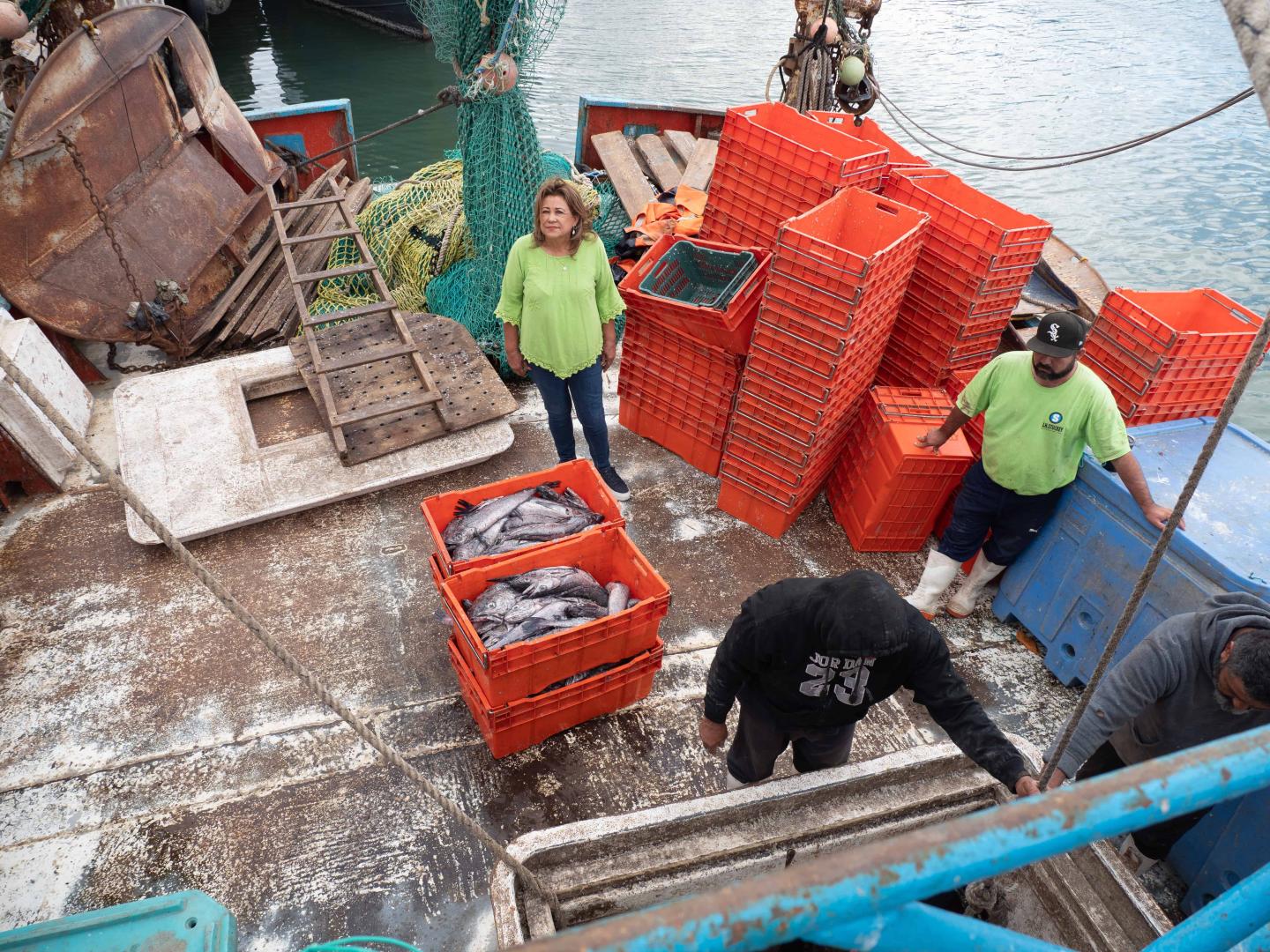
Permits issued by the national fisheries authority brought order to what Cervantes recalls as “chaos,” when anyone could fish without oversight. Strict practices keep bycatch low and allow the fishery to remain within biological limits, keeping harvests below 10 percent of the stock to protect hake’s ability to reproduce.
Over the past few years, revenues have been rising. New markets have opened as buyers from Asia and Africa seek out Mexican hake. Today, the fishery supports more than 700 direct jobs and another 1,100 indirect jobs in processing, logistics and related industries across Sonora and Baja California, making it a cornerstone of coastal economies. To pursue additional markets, regional fishing industry representatives are now pursuing Marine Stewardship Council certification. MSC certification opens access to premium global markets and provides independent proof that the fishery is well managed and environmentally responsible.
“MSC certification tells buyers that the fishery is playing the long game — protecting its stock, reducing its footprint and delivering a product whose quality comes from doing things right,” says Quimbar.
Still, challenges remain. With uneven enforcement of permits and catch limits, illegal fishing continues to shadow the gains the fishery has made. To safeguard their gains, producers have rallied around a comprehensive fishery improvement project, with the goal of setting new standards for best practices.
- The little-known success story of unlikely allies who saved Gulf Coast fishing
- Ghana’s traditional fishers are using new technology to bolster climate-smart fishing
A future anchored in sustainability
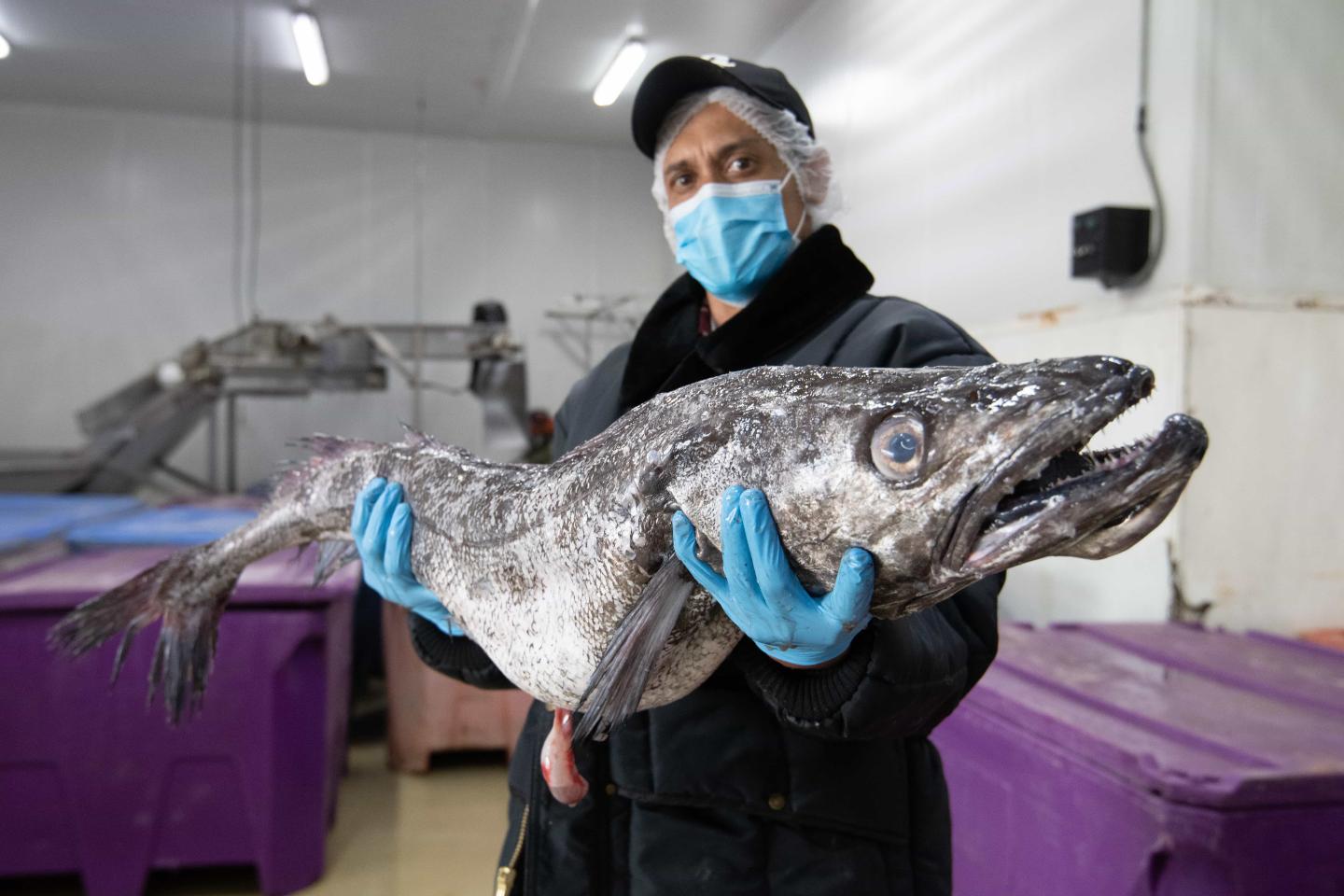
Up and down the Gulf coast, hope now rides on the same waves that once carried crisis. “The lesson of shrimp hasn’t been forgotten,” Quimbar says. “It’s been transformed into a shared purpose to build a fishery that lasts."
Now other regions are looking to the Gulf of California’s hake fishery as a model for stewardship and long-term health, especially as warming seas and other climate pressures bear down on the industry.
Cervantes says she imagines a future where sustainable fishing is not just a local strategy, but a national standard.
“My dream is for the fish to stay in Mexico,” she says, “so that our children can continue to work in this industry, continue to prosper. That will only happen if we have a sustainable approach. Right now, we are heading in that direction.”