
Brokering a deal for clean water in America’s heartland
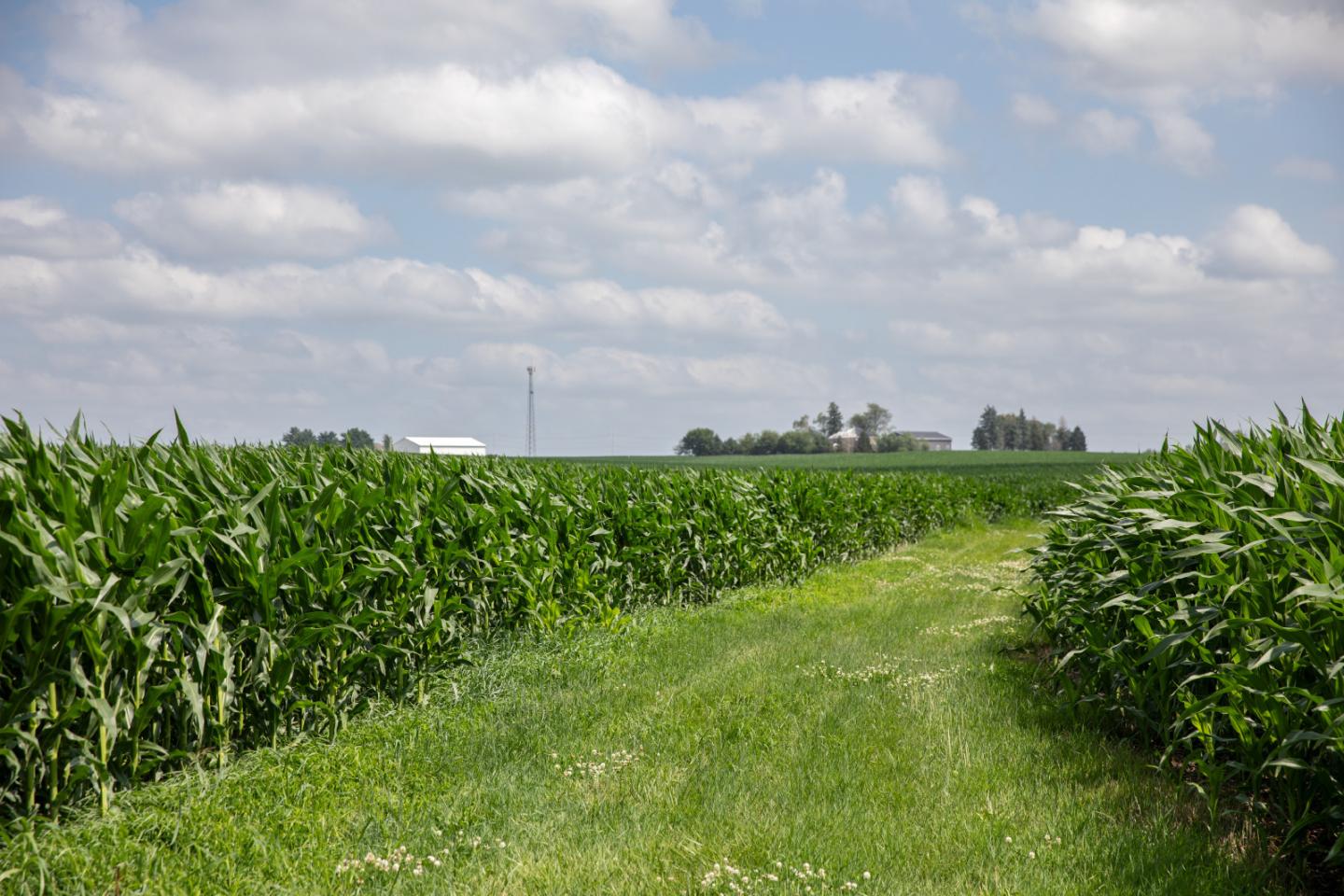
A summer’s day on Brad Ohrt's farm in Reinbeck, Iowa is something out of a picture book: Cotton-candy clouds skate across the sky; endless rows of corn wave in the wind; the creek ripples in the breeze.
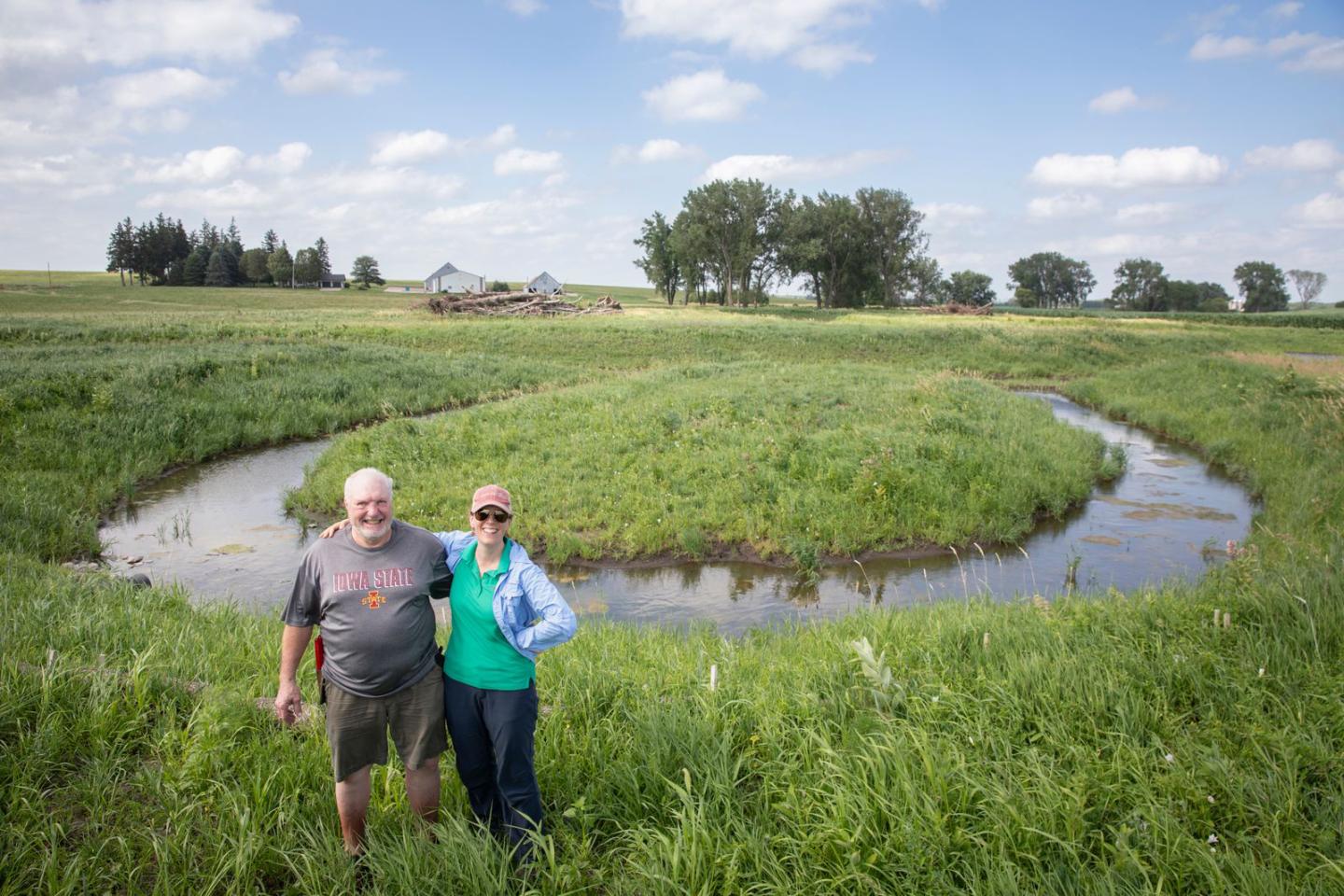
Ohrt's family has farmed this land for over 150 years. As a boy, Ohrt would wade through a wide creek, 80 or 90 feet across, to catch Topeka shiners, little freshwater minnows, in his net.
He can still trace the looping curves of its natural, meandering path from memory. Today, that same trickling creek, along the edges of his fields, is about three feet wide, and there are no shiners to be found. The tiny fish, native to prairie streams, is on the endangered species list. Too many of Iowa's streams and wetlands were filled in or drained for farming or polluted by farm field runoff.
Yet Ohrt is newly optimistic about their return, thanks to a novel program that has allowed him to bring back wetland habitat and install natural filtration systems to keep pollution out of the creek.
That program was led by powerful agricultural institutions in Iowa's farm country — groups that don’t often find common ground with environmentalists. But this time, a bank, a nonprofit environmental group and a member-run farmer cooperative came together to negotiate a new kind of financial agreement: One built on the premise that funding sustainability pays dividends for farmers and farmland down the line.
The farmer and the hustler
“It's good to know that I'm taking a stand and doing something to purify the water and help the wildlife, and so forth,” says Ohrt.
A self-described “true conservationist,” Ohrt started protecting his soil from degradation and lowering fertilizer use as far back as 1983. He started with strip-tilling — tilling only narrow strips of soil where seeds will be planted — to prevent soil erosion, enrich soil naturally and lower fertilizer use. He has continued to add more regenerative and sustainable practices in the years since.
Like many farmers, Ohrt is always looking for ways to do more. But conservation can be expensive. A single natural filtration system can cost between $5,000 - $7,000. Restoring an oxbow wetland can cost as much as $16,000. Most farmers can’t afford the up-front costs, particularly at a time when they’re facing volatile commodity prices, increasingly extreme weather and rising fuel and fertilizer costs.
That's where Ruth McCabe comes in.
“I'm the hustler,” says McCabe, senior conservation agronomist at Heartland Cooperative, one of region's largest farm co-ops — member-owned companies that supply farmers with seed, fertilizer and expert advice. “Like the song. Day in and day out, that's what I do. I find someone who wants to spend money on conservation, and I take that money and go spend it on conservation.”
A former Marine with an agronomy degree from Iowa State, McCabe is single-minded in pursuing her mission: Help farmers adopt practices that improve water quality and soil health while maintaining, or improving, the productivity and profitability of their farms.
And so McCabe pitches herself to food companies with sustainability goals, applies to federal conservation grants, reaches out to private foundations and nonprofits — anyone who might want to invest in on-farm conservation.
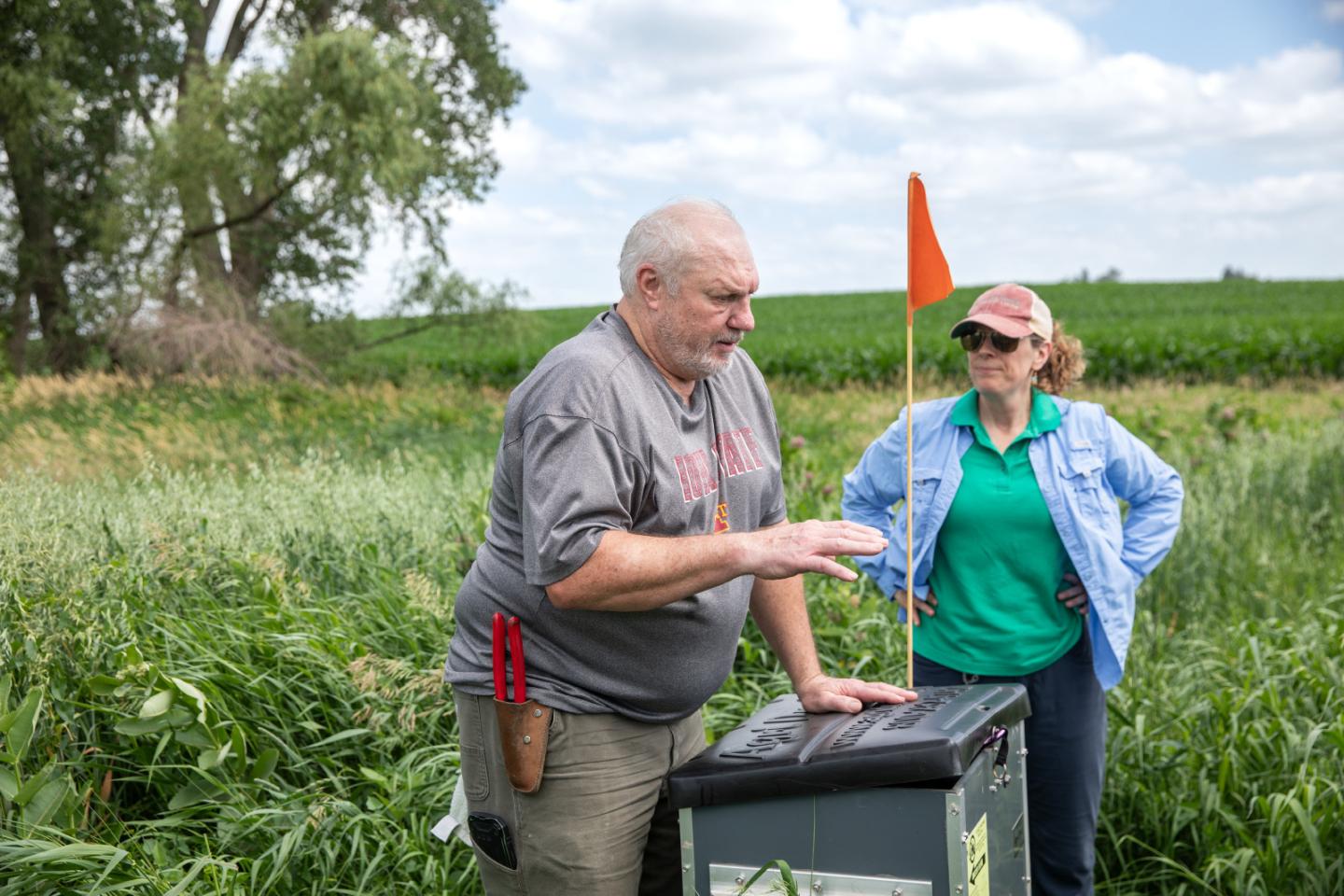
With funding to cover a farmer's up-front costs in hand, she pitches farmers on what she calls “physical conservation practices” — such as natural filtration systems called saturated buffers, strips of grass and plants between farm field and the creek that clean water draining from the field; or practices like planting cover crops, which help prevent erosion and enrich farm soils, reducing fertilizer use.
Other crop experts, McCabe says, “sell bags of seed and jugs of fertilizer. I sell saturated buffers. If I don't sell, I don't get paid for my time trying to sell.”
Fortunately for McCabe, interest in practices like strip-till, no-till, cover crops, wetland restoration and emerging technologies is growing throughout Iowa. Farmers in the state initiated a record 26 wetland projects in 2025, according to the Iowa Farm Bureau, and planted more than 3.87 million acres of cover crops in 2024.
The need for these practices is growing, too.
“Iowa was once nothing but prairie and wetlands, and they were the sponge for the upper Midwest,” McCabe explains. The native prairie and wetlands absorbed, filtered and stored rainwater before it flowed into the Mississippi River.
Over time, however, much of that landscape was transformed to support agriculture. Underground drainage pipes carried excess water off fields, helping make Iowa an agricultural powerhouse: The state ranks first in the nation for corn production.
Today, that same drainage system is fueling a drinking water crisis.
“So, we drained all of those a couple hundred years ago,” McCabe says. “And then about 50 to 100 years ago we realized, 'Oh, sh*t — that was really valuable.’ Nobody should have drained all the wetlands.”
Today, rainwater moving through farm fields picks up nitrates from fertilizer and carries the chemicals directly into streams, rivers and groundwater, causing problems with water quality in Iowa and downstream, all the way to the Gulf, where nitrates from farm runoff have created a “dead zone” in which ocean life can’t survive.
As climate change brings heavier rainstorms and more frequent flooding to the region, the crisis is becoming more acute.
Farmers like Ohrt are keen to find solutions.
“We have to protect our water,” Ohrt says. “I mean, that's just common sense.”
Environmental news that matters, straight to your inbox
Banking on nature
“Farmers need support to invest in sustainability and regenerative agriculture,” says Vincent Gauthier, an agriculture and finance expert from Environmental Defense Fund, the global, science-based nonprofit. “Farmers rely on their local bank or farm credit for business loans to pay for things like seeds, fertilizer or new equipment — but those loans are built to be paid back quickly, which doesn't work for these kinds of investments.”
Conservation can take years to deliver financial returns — a mismatch with the needs of lenders and investors to deliver near-term returns that leaves these practices unfunded. Most banks aren’t yet experts in sustainability, Gauthier notes, and require technical support.
So EDF began exploring back in 2022 whether agricultural lenders and farm cooperatives could work together to help meet both needs — funding and technical support for conservation — at once.
It was a big idea.
“For agricultural banks, investing in sustainability for the first time can be difficult without expert advice and support,” Gauthier points out. Partnerships with organizations like EDF, with expertise in finance, farming and sustainability, are essential.
Meanwhile, for a member-owned farming co-op, agreeing to sustainability goals is not straightforward or simple.
It wasn’t exactly a match made in heaven.
Still, Gauthier’s team believed there was an opportunity. Agricultural banks handle $600 billion in loans annually. If even a fraction of that capital could help support conservation, it could transform the equation for farmers across rural America. By 2023, a few of the largest banks had announced sustainability goals, but they hadn’t explored whether their loans could help them reach those targets.
The team approached CoBank, the nation's largest agricultural lender, offering to help bridge the gap between sustainable agriculture and the world of finance.
As a member of the U.S. Farm Credit system, the bank has a mission to financially support both farmers and rural communities. CoBank was increasingly focused on the risks climate change poses to farmers, who are facing more frequent floods, droughts and heat waves as climate pollution accumulates in the atmosphere.
“If there are ways that we can support our customers to make them more resilient, then we see that as aligned with our overall mission,” says Mindy Montgomery, who leads CoBank’s sustainability strategy. “Sustainable or regenerative agricultural practices are part of that.”
EDF and CoBank began developing a sustainability-linked loan that would automatically lower its interest rate if conservation targets — practices to help prevent flooding and protect drinking water — were met.
CoBank came to see the loan as a “long term play,” according to Montgomery, acknowledging that a lower interest rate means lower short-term returns. Conservation practices help buffer farmers against extreme weather and volatile market conditions – helping them stay in business and remain customers of CoBank.
“If we don’t have customers to support, then we don’t have a business to run,” Montgomery says.
The loan was designed for agricultural cooperatives, which could provide the expertise and support farmers need to actually put conservation into practice.
The team then set out to find what Gauthier calls “an ambitious co-op” willing to try it.
They found Heartland.
Brokering an unprecedented deal
The loan terms took nearly a year to negotiate. The deal nearly fell apart a few times.
“Cobank was functioning on Planet X and we were on Planet Y,” McCabe recalls. “The kind of legal mumbo jumbo, them working with their investors ... it was ridiculous. There were times were I was like, ‘I’m out!’ or Cobank was like, ‘we’re out.’
“And then EDF would step in and be like, ‘Okay, we'll help. We're going to help lift this for a while,’” she says.
“At the time, we weren't too familiar with sustainable agriculture practices — the best way to measure them, how to establish a baseline with the customer,” Montgomery recalls. “And that's where EDF was a great partner to us. EDF had the knowledge to help develop those, and that was a critical piece.”
Working with EDF’s team of soil scientists and sustainability experts, Heartland developed conservation targets ambitious enough to qualify for the interest-rate reduction while remaining achievable.
Those goals were to reach a total of 98,000 acres planted with cover crops and the installation of more than 200 new edge-of-field structures, including saturated buffers, that filter water and reduce nutrients reaching Iowa streams, over a three-year span.
Even then, the financial equation wasn’t quite there yet. A supporting grant from Iowa nonprofit Great Outdoors Foundation to Heartland helped close the gap.
In November 2024, the partners launched the program.
Generating returns
The loan allowed McCabe to hire more staff, reach more farmers and expand the size and complexity of their conservation projects.
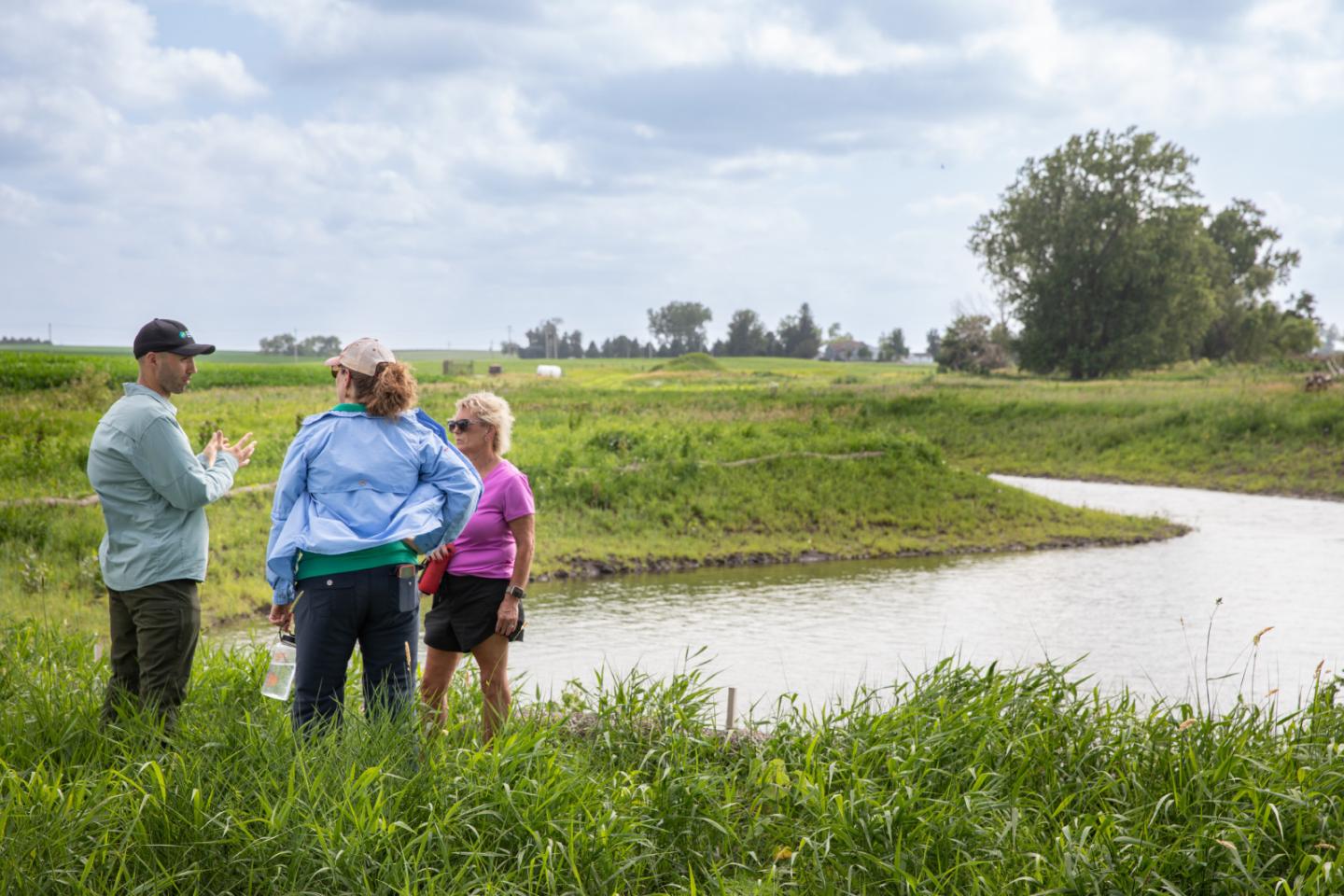
The impact can be seen on Ohrt's farm. Alongside one of Ohrt’s cornfields, four saturated buffers steadily direct runoff to be filtered by soil microbes and plant life. At the corner of another field, a newly installed wetland steadily filters runoff from about 300 acres, according to McCabe.
Whether a saturated buffer or a wetland, these installations are “the same thing essentially as a rain garden,” says Gauthier. “It's just in an agricultural landscape rather than a backyard.”
Heartland’s program pays farmers $1,000 per saturated buffer and covers installation costs.
“We paid Brad $10,000 as an incentive payment,” for the restored wetland, McCabe notes, on top of covering the costs of the installation.
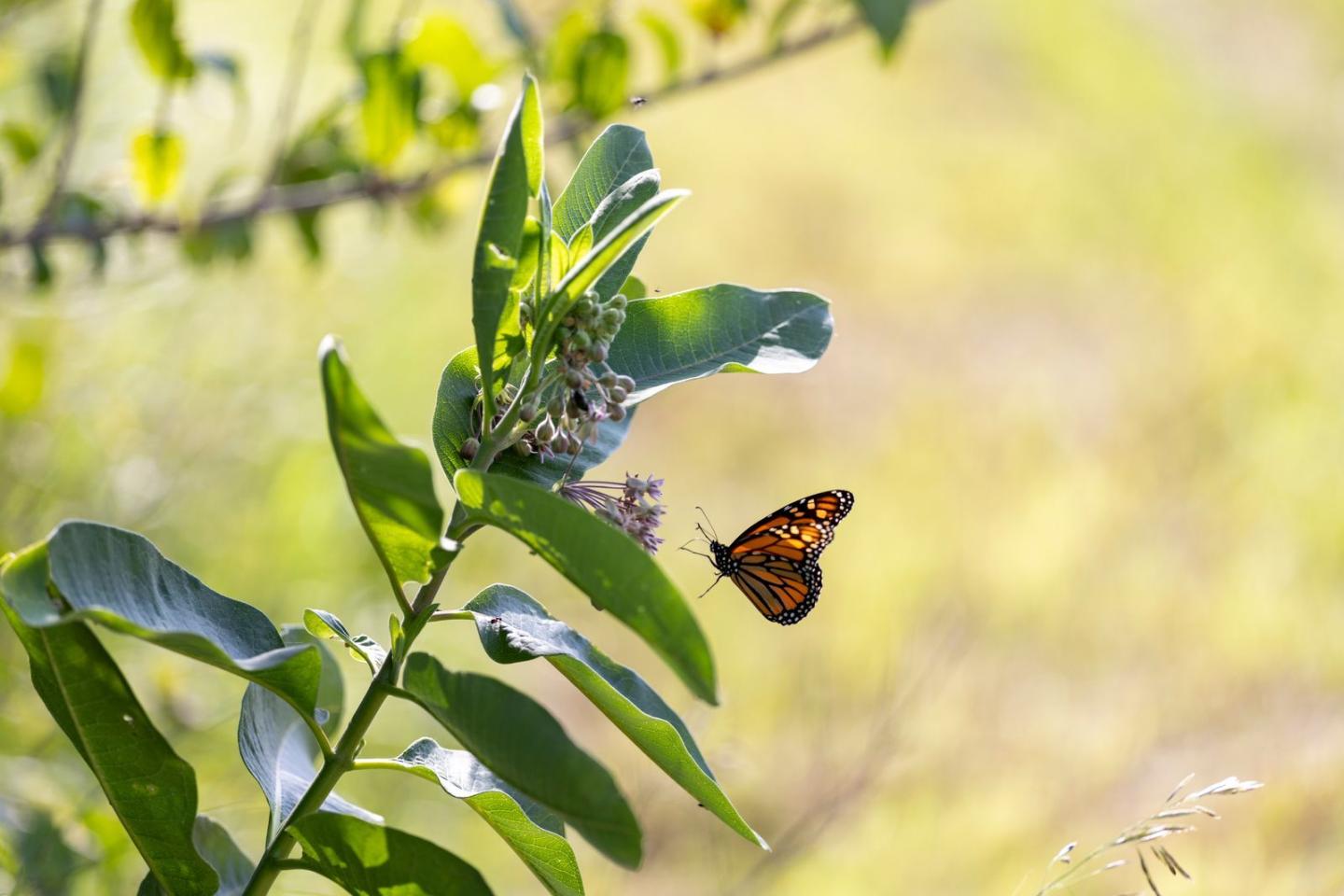
The transformation is not always obvious. In the wild patches of milkweed, only a sharp-eyed observer might notice the tops of four black boxes buried amongst the brambles.
These unobtrusive little boxes, called control boxes, interrupt a drainage pipe before its outlet and divert water coming off crop fields into vegetated areas that clean the water before it reaches the creek.
When the water in a field rises above the control box’s preset level, overflow slowly soaks into the healthy soil in which the box is buried. Here, nitrates from fertilizer — toxic to humans when they get into drinking water — are happily consumed by soil microbes and plants as food. Each of these saturated buffers can help filter runoff from 30 to 40 acres of crops.
(A similar system that uses microbes in buried woodchips instead of soil to filter runoff, called a “bioreactor,” can handle water from up to 100 acres. Over the past three years, Heartland’s program has installed over 200 buffers and bioreactors on farms throughout the state.)
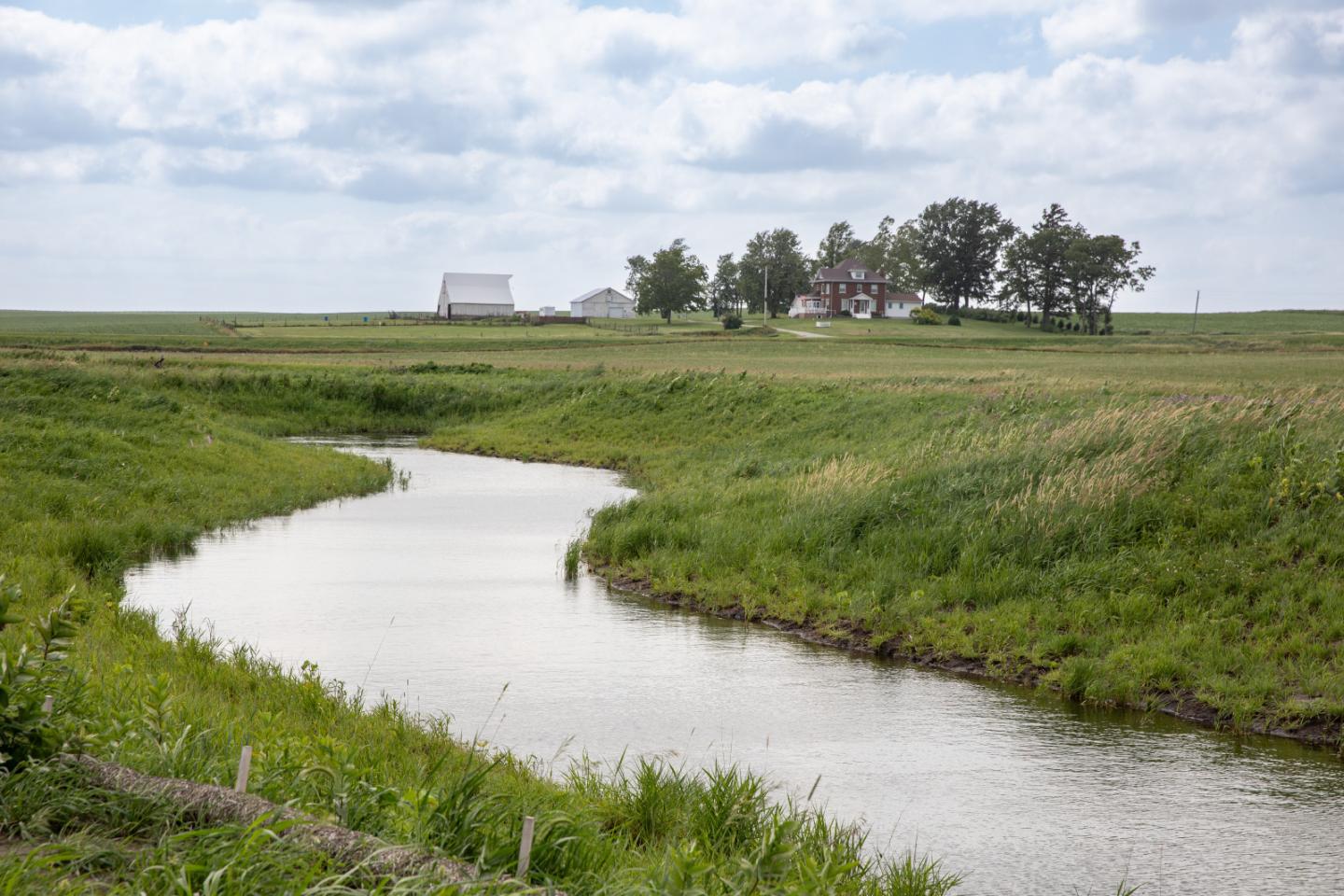
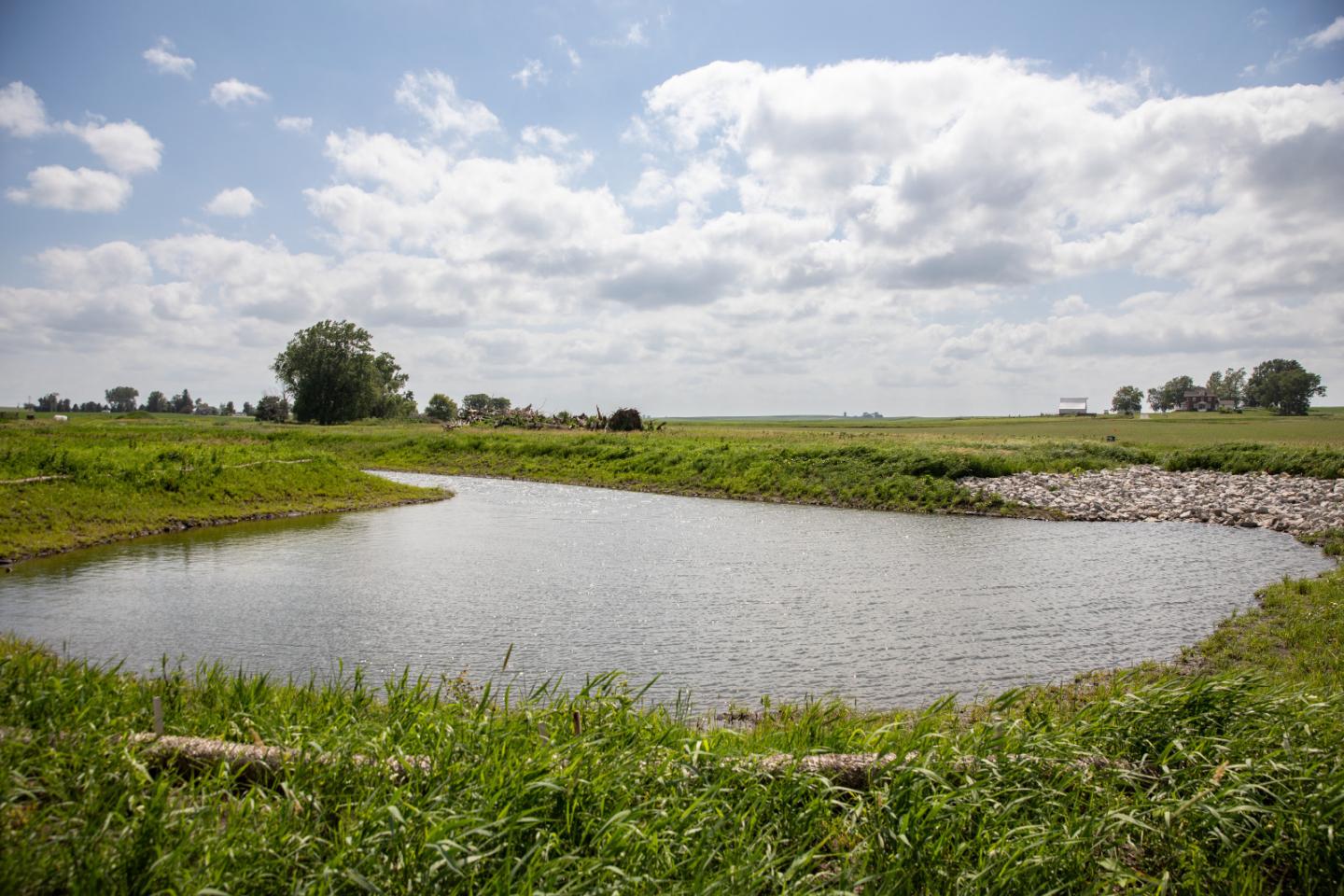
Unlike the little boxes, Ohrt’s restored oxbow wetland — named for the looping shape of the stream that flows through it — is hard to miss. On a hot summer's day, birds swoop in for a drink from the shimmering pond, while butterflies hover over milkweed blooming along its tall banks.
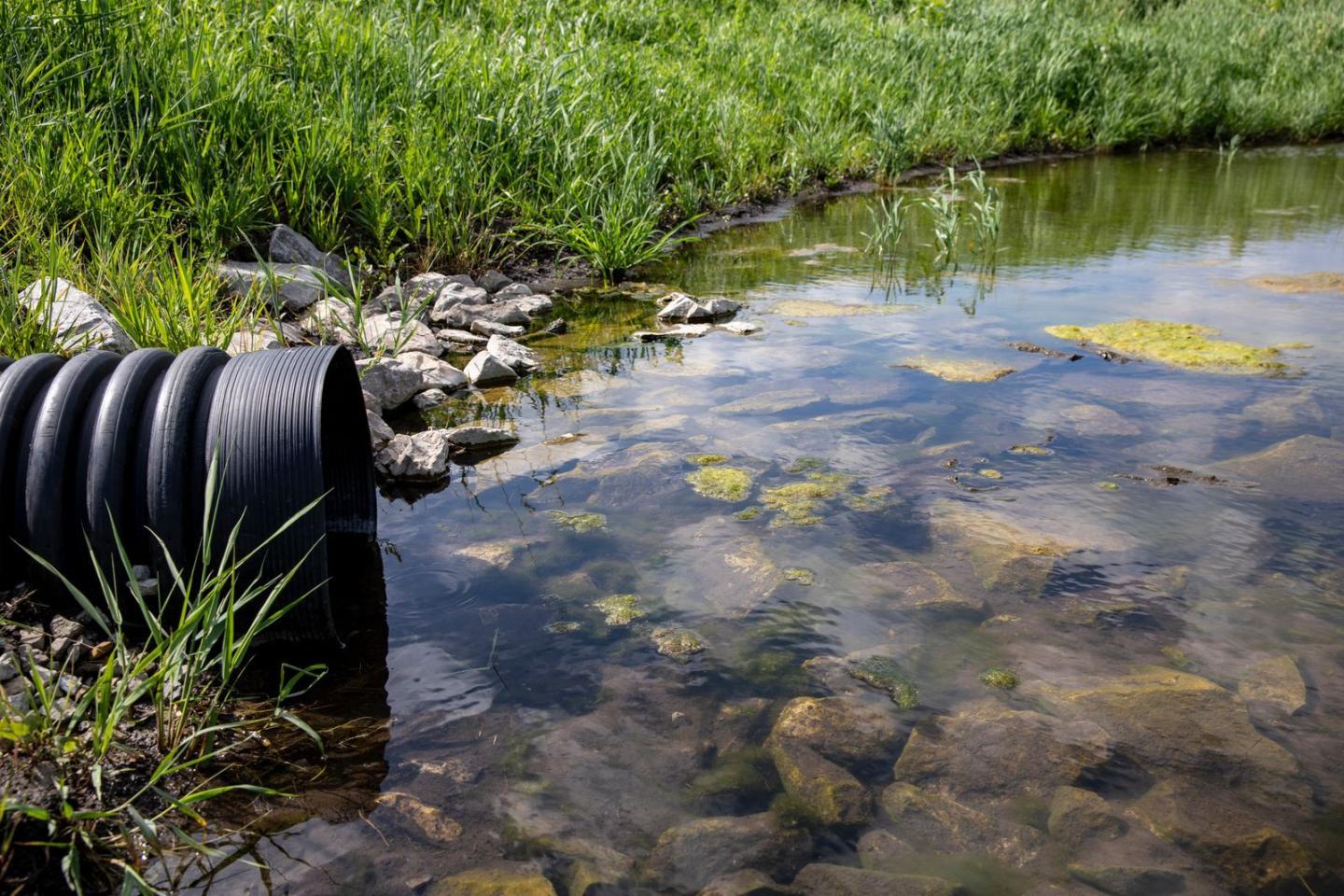
Following the stream that feeds the pond, however, reveals less desirable beginnings: An underground drainage pipe juts out from the tall stream bank and delivers runoff into the water below.
Here, the stream is clouded, its surface punctuated by lime-colored algae blooms.
“The water coming into this is very nutrient rich,” McCabe explains. “It settles here. You're going to see a bunch of algae. It's going to look very gross. It's supposed to look like that, because it then eventually gets cleaned as it comes out of this part and it goes into the oxbow.”
As the water slowly meanders along the looping path, a variety of plant roots, algae and microbial life steadily munch up the fertilizer.
By the time water arrives at the pond, it is glass-like and clear.
“This is rebuilding something that would have been here anyway,” she explains, noting that Iowa's landscape is covered with oxbow-shaped scars from its lost wetlands. “I like to think of stuff like this as returning ecosystem services to an agricultural field.”
Scaling conservation for farming's future
Since the loan started in 2024, Heartland has achieved the vast majority of its sustainability targets, earning interest rate reductions from CoBank each year. On top of installing 200+ natural filtration systems, the co-op has helped plant about 83,500 acres of cover crops annually on average and held nearly 25,000 conversations with farmers across Iowa about conservation practices.
McCabe recently departed Heartland, but the program she helped build continues. “Ruth helped our team build a program that proved what's possible when it comes to conservation sales to farmers, and we're committed to continuing that important work,” the co-op said in a statement.
The program's success earned the co-op a statewide award for water conservation this July. “This is a huge win for water quality, for Iowa farmers and for the broader food and ag industry,” says Gauthier. “To our knowledge, this is the first-of-its-kind sustainability-linked loan for an ag retail cooperative in the U.S.”
EDF has successfully created other sustainability-linked agricultural loans and is also working with food companies and agricultural organizations to grow investment in sustainable farming.
Inventing new ways to get sustainability dollars to the farmers who need them is more crucial than ever, experts say, as farmers face rising financial and climate-driven challenges — and federal policy to support them stalls out. A recent report forecasts a continuing downturn for Iowa’s farmers. The future of farming is on Ohrt's mind, as he prepares to accept an award from the Iowa State Fair in honor of his farm’s 150th anniversary. He plans to pass along his farm to an apprentice who cares about conservation as much as he does, he says.
“I was born into farming, and I've always enjoyed it a lot. I guess it's part of me,” Ohrt says. “People that aren't farmers don't quite understand it, but it's in our blood.”