Trump EPA proposes gutting safeguards on oil and gas pollution
Weakened rule would allow more methane, a climate super pollutant, and toxic air pollution from oil and gas sites nationwide.
When Rosalia Tejeda moved from New York City to Arlington, Texas in 2009, she came in search of a better quality of life: a lower cost of living and more space for her kids to play outside.

Today, the backyard where she envisioned her kids playing is often empty. What Tejeda didn’t know is that while her dollar did go further in Texas, there were hidden costs to living in Arlington. That’s because her home, like so many in Arlington, is less than a mile away from four different active natural gas drilling sites — and the pollution they generate. Tejeda doesn’t like her three kids to play outside for too long. Her youngest, daughter, Audrey, now 7 years old, was recently diagnosed with asthma.
“I’ll never know if living here contributed to my daughter’s asthma,” says Tejeda. “But when you live in a place like this, you’re always wondering what’s in the air, wondering what the right thing is to do to protect your kids. It’s always in the back of your mind.”
Now, for Tejeda and millions of other Americans living near oil and gas development, the question of just what’s in the air they’re breathing is becoming even more pressing.
The Trump administration recently proposed gutting national standards that protect people and the environment from massive amounts of methane pollution from oil and gas operations.
Rolling back a critical climate and health protection
Methane is a potent greenhouse gas responsible for about 30% of the warming our planet is experiencing today, and the oil and gas industry is a major source. (Methane is the main component of natural gas.) When methane is released from oil and gas drilling and other processes, other dangerous pollutants are also released — such as smog-and soot-forming volatile organic compounds, which cause asthma, and cancer-causing air toxins like benzene and formaldehyde.
The Trump EPA has proposed scaling back common-sense standards that required oil and gas companies to address their methane pollution and waste. It would end the super-emitter program, which allowed third-party groups to use satellites and thermal imaging to detect and report massive, high-volume methane leaks. And it would allow for routine burnoffs of natural gas — those towering flares that look like industrial birthday candles. In 2023, flaring was responsible for $5.6 billion in health and climate costs in the U.S. according to the global nonprofit Environmental Defense Fund.
The rollback would also create a gaping loophole for the industry's biggest polluters — low production wells. There are hundreds of thousands of these older, leaky wells across the country, which together account for just around 7% of the country’s gas supply, but about 60% of the industry’s methane pollution. Many of these wells, in fact, release more pollution than sellable gas.
“Abolishing standards for these low-producing, high-polluting wells is nonsensical,” says Rosalie Winn, a senior attorney at Environmental Defense Fund. “Refusing to address this source of pollution is like having thousands of leaks in your roof but refusing to fix them because each one only leaks a bit.” Millions of Americans live near polluting oil and gas wells
“This is infuriating,” says Tejeda. “They are drilling for gas practically in the backyard of the daycare where my son used to go, and now they’re saying to oil and gas companies it’s ok for you to be less careful? Would the people making these decisions send their kids to my son’s daycare? Not a chance.”
In the United States, 9.2 million people live within a half-mile of an active well site — a zone in which they are most vulnerable to air pollution, says EDF health scientist Meagan Weisner. “The health literature is pretty clear that certain health impacts can happen beyond one mile, but for sure that half mile zone will have greater risks,” she says.
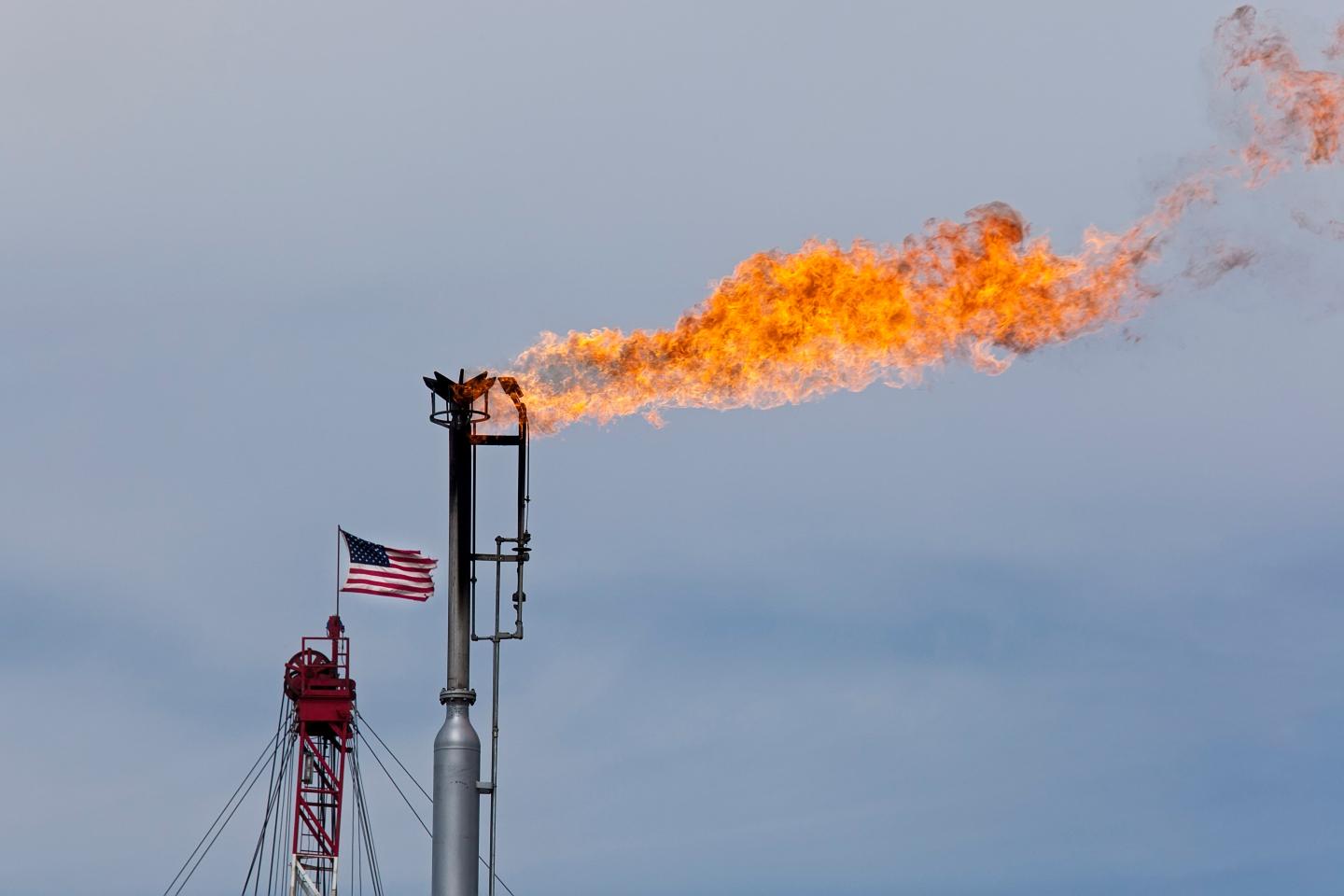
Methane pollution is also accelerating the rate of climate change, which is increasing the frequency and intensity of extreme weather events such as droughts, tornadoes and wildfires. The oil and gas industry is responsible for around 30% of man-made methane pollution in the U.S.
The federal methane standards now under attack, would have avoided 58 million tons of methane pollution through 2038, as well as 16 million tons of volatile organic compounds and 590,000 tons of air toxins. They would have prevented thousands of early deaths and headed off up to 97,000 cases of asthma symptoms.
Because methane is the primary component of natural gas, there are also huge economic costs of wasting so much fuel — especially considering the current energy crisis. Since the Trump administration signaled it would not be enforcing methane standards over a year ago, the industry has leaked, vented or flared $7 billion worth of natural gas, according to EDF.
Despite attacks, progress is possible
Ever since taking office in 2025, the Trump administration has taken aim at U.S. methane standards — first by delaying implementation and signaling lax enforcement, and now, by proposing to weaken key requirements. The science-backed standards, supported by major companies at the time were designed to require the industry to take straightforward, practical steps — using readily available technology and equipment — to prevent methane from escaping from their operations, like finding leaks, stopping routine flaring, catching super-emitter events and requiring operators to use cleaner equipment.
“For years, EDF helped lead the push to get these vital standards passed,” says Winn. “And we will work just as hard to make sure they aren’t gutted.”
While the federal government backtracks on protecting people’s health and safeguarding the climate, major oil and gas producing states like Colorado and New Mexico are charging ahead with protective standards of their own. Colorado became the first state to adopt methane standards for the oil and gas industry in 2014, standards which it has since strengthened and expanded — including fully adopting the federal standards this year. Those standards have slashed methane pollution in the state by 70% between 2010-2017.
In New Mexico, state methane standards finalized in 2021 have made it possible for the state to produce natural gas with half the methane footprint of neighboring Texas according to data collected from MethaneSAT.
Beyond the U.S., the European Union’s methane regulation, which went into force in 2025, aims to reduce methane emissions from the energy sector by 75% by 2030. The regulation applies to domestically produced energy, and, starting in 2028, will also apply to all imports of fuel, putting pressure on fuel exporting countries — including the U.S. — to produce fuel with significantly less methane pollution.
“Pollution always has a cost,” says Winn. “They only question is who should pay that cost? Should it be polluting companies raking in record-breaking profits? Or should it be the American people paying with their health and safety?”