
What's causing Europe's deadly heat waves?
Sofia Esquivel Elizondo was explaining the details of a research paper to a group of scientists, economists and communications professionals during a meeting in late June when she realized she was starting to confuse meters with kilometers. “I had to apologize. I was so hot that I could not focus,” explained Elizondo, a scientist at the global nonprofit Environmental Defense Fund.

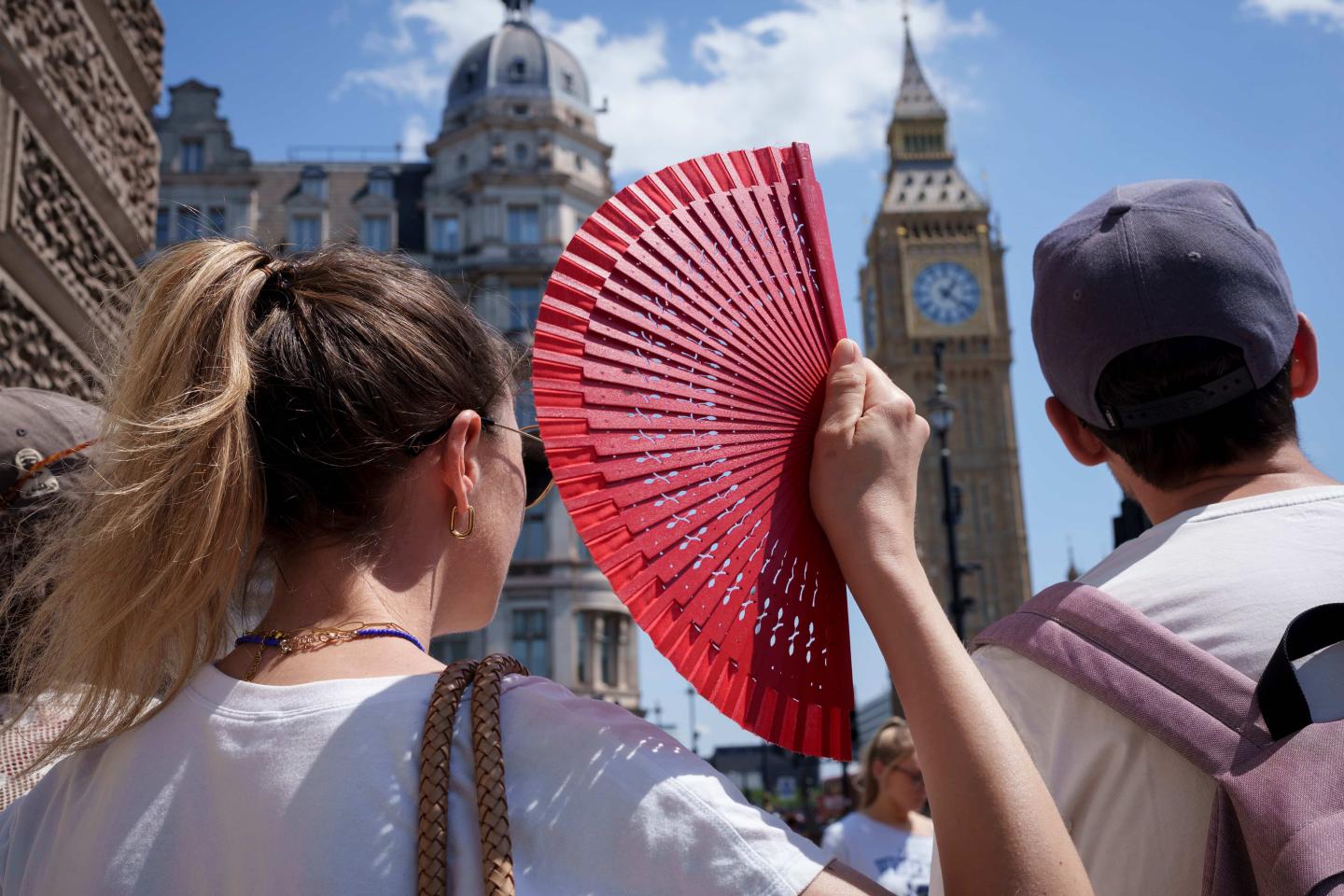
That day, during one of this summer's deadly European heat waves, Elizondo had been working from home in Dusseldorf, Germany. Like most homes on the continent, her third-floor apartment has no air conditioning — only a fan. And as outdoor temperatures climbed above 100 degrees, she found it too difficult to focus.
“When it’s like that, you are not hungry. You cannot go outside. You do not want to be in front of your computer that gives off heat,” she says. At night, the sweltering temperatures made it impossible to sleep. “But I know I’m lucky,” she says. “I can tell my manager I need some days off. There are people who don’t have that kind of choice.”
This year, Europe experienced its hottest June on record. The extreme heat in the region is killing people. It’s also disrupting the economy, agriculture and ecosystems. In England and Wales, for instance, more than 2,700 people died from heat-related causes in May and June. And in England’s capital, organizers of London Climate Action Week — an event that brings together leaders, scientists and advocates to galvanize action on climate change — had to cancel an event on adaptation to extreme heat, due to ... extreme heat. The urgency of their work was lost on no one there.
- June heat wave fits a pattern of increasingly dangerous weather
- 5 ways to stay cool and save on your electric bill this summer
Meanwhile, in southern Spain, wildfires killed at least 12 and displaced many more. And in Belgium and France, hundreds of thousands of chickens and other poultry died in the heat; farmers warned of decreased milk production.
“Climate change is raising the planet’s baseline temperatures,” explains Fiona Lo, an EDF climate scientist. Rising temperatures are altering atmospheric circulation, including the jet streams — specific air currents that flow from west to east high in the atmosphere.

In Europe, this means that the air coming from northern Africa, which is usually hot, essentially parks itself over Spain, France, Italy, Germany and the UK, making heat waves longer, more frequent and intense.
The unusually warm Atlantic Ocean and Mediterranean Sea are also contributing heat and moisture to the continent.
Environmental news that matters, straight to your inbox
Europe isn’t the only part of the world experiencing extreme temperatures as the result of climate change, of course. In the United States, for instance, a series of heat domes have already blanketed the country with scorching heat, disrupting July 4th celebrations on the East Coast and breaching 100 degrees in the Dakotas and Montana, where air conditioning is less common.
This summer’s El Niño also looks to be contributing an additional layer of heat stress in much of the world.
El Niño, a natural phenomenon, involves increased ocean surface temperatures in the central and eastern equatorial Pacific, can raise global temperatures and is expected to impact weather and climate patterns in the months ahead.
“With climate change already happening and continuing into the future, we will experience longer and hotter heat waves more often,” says Lo. “This is becoming our new normal and we must learn to live with it.”
Governments, businesses and civic organizations need to address the impacts of extreme heat and educate the public, Elizondo says. “People should not feel like they have to jump into rivers and risk their lives to escape the heat. We need to have some kind of better alternative.” Likewise, people who work outdoors deserve humane conditions.

Buildings must be adapted as well. In Europe, cooler climates have meant most were designed to trap heat, not protect against it. Reflective roofs, central cooling systems, and windows that can accommodate portable air conditioners can go a long way toward helping European cities transition to hotter summers. Urban trees, shade and green spaces, especially in city centers, can also help provide relief and could reduce temperatures.
“Most people can live through extreme weather and can adapt to the high temperatures that are already here,” Elizondo says. But to protect ourselves and those we love, we need to cut climate pollution — much of it from the extraction and burning of fossil fuels — and take advantage of the solutions available to us, she says. “That way, in future summers, we’ll be able to think clearly enough to adapt to the new normal that’s no longer on the horizon. It’s already here.”