
India’s new green revolution
How do you enlist 100 million farmers in the fight against climate change? It starts with trust.
The sun beats down on Manoj Kumar Kushwaha’s small plot in East Champaran, in the Indian state of Bihar. For years, his ritual was straightforward: At sowing time, he would scatter bag after bag of urea, a nitrogen-containing fertilizer, across his rice and wheat fields. He’d apply a hefty 5.5 pounds of fertilizer per kattha, a local land measure — a dose passed down through generations and reinforced by fear. It was an act of faith — faith that more fertilizer meant more grain, and fear that without it, the increasingly fickle rains and baking heat would steal his harvest. The cost was crippling, but it was the insurance premium he thought he had to pay.
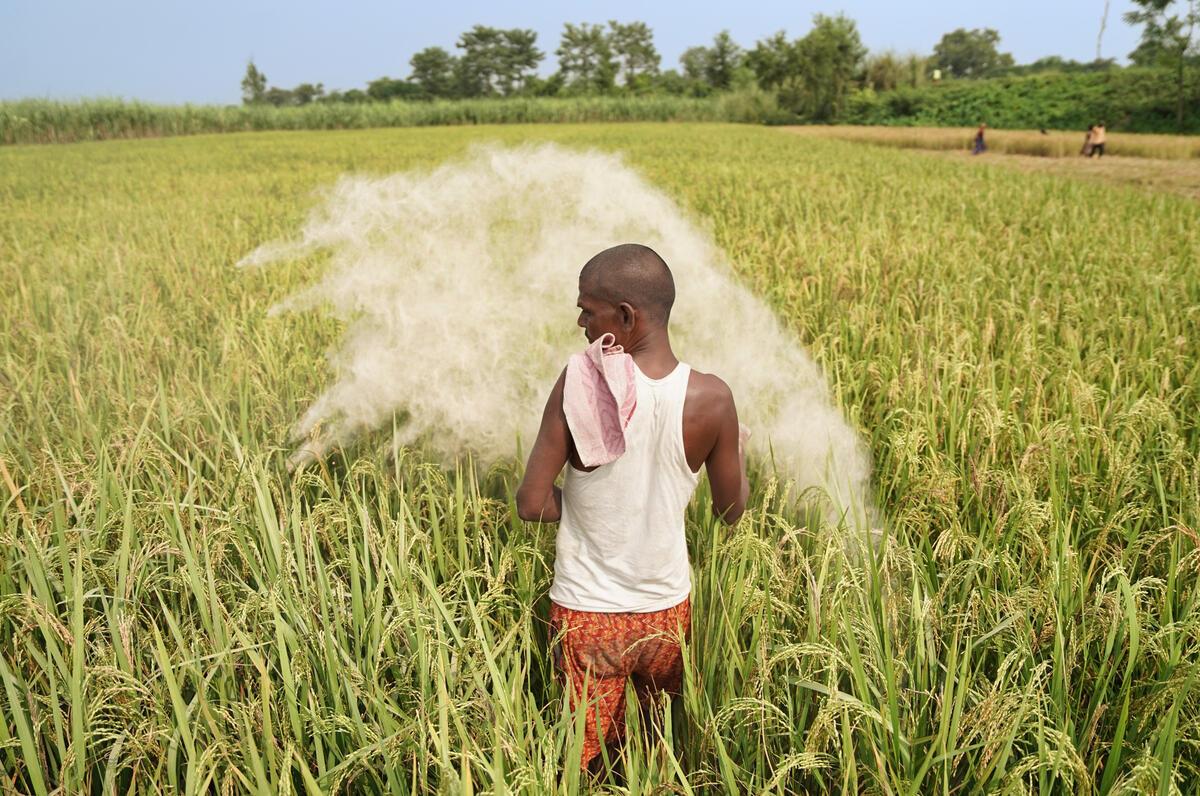
Six hundred miles away, in a conference room in New Delhi, scientists and strategists from Environmental Defense Fund, the global nonprofit, were focused on a different set of numbers. They saw India’s staggering $21 billion annual fertilizer subsidy. They observed that agriculture accounted for 20% of the nation’s greenhouse gases, with nitrogen overuse being a primary contributor. They saw the silent yet powerful leak of nitrous oxide, a greenhouse gas nearly 300 times more potent than carbon dioxide, rising from fields like Kushwaha’s.
Hisham Mundol, EDF’s lead India adviser, saw a connection others missed. “Farmers are on the front lines of climate change,” he explains. “They use fertilizer as an insurance policy.”
The problem wasn’t carelessness; it was a rational response to a climate of deep uncertainty. The solution, therefore, couldn’t be a ban or a blame. It had to be a better form of insurance — one that saved money, secured yields and protected the planet.
This is the story of how that philosophy took root, beginning with a pilot in 2023, spreading to 60,000 farmers across three states, and sparking a quiet revolution in measurement and trust.
The unseen algorithm in the soil
In the world of agronomy, there is a concept called “N Balance.” It is the precise calculation between the nitrogen a crop needs and the nitrogen a farmer applies. In India, this balance has been tipped disastrously toward excess.
“Three out of four farmers in Bihar are overapplying nitrogen,” says Ajeet Singh, EDF’s manager for climate-smart agriculture, who has over two decades of grassroots experience. The consequences are a cascade of loss: financial loss for the farmer, ecological loss for the soil and water, and a profound cost for the climate.
EDF helped develop a user-friendly N Balance tool that farmers and others can use to estimate nitrogen loss, at a field level or across a supply chain. In 2023, Singh and others launched a pilot program to use the tool in India.
It began with a simple survey. Across 20,000 farmers in the states of Maharashtra, Bihar and Tamil Nadu, they asked 13 straightforward questions about plot size, typical yield, type and amount of fertilizer used.
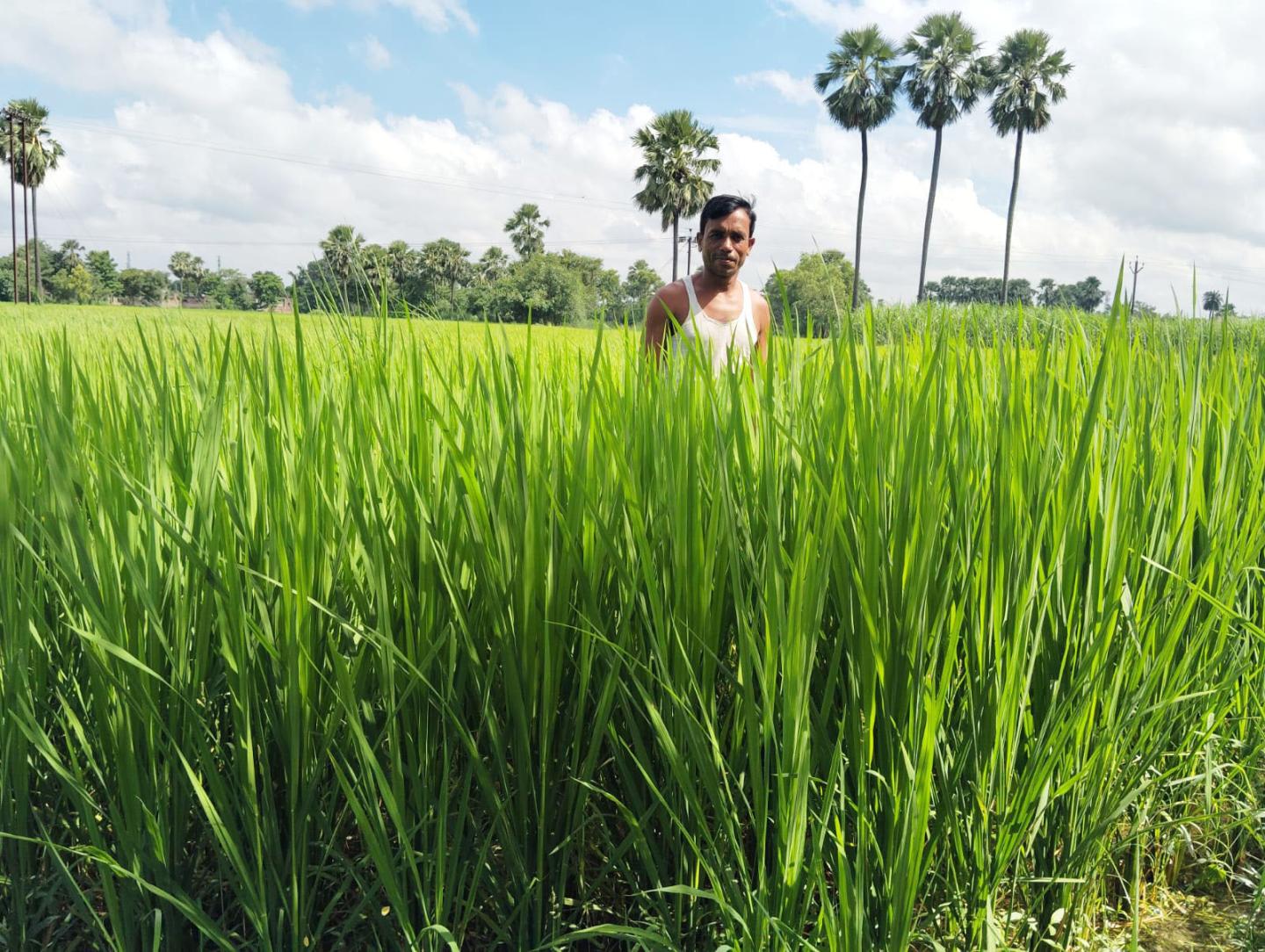
“We calculate the nitrogen balance and based on that, we provide advisories to individual farmers on what amount of fertilizer they need to reduce gradually,” explains EDF’s Samir Mirza, an agricultural engineer.
For a farmer like Kushwaha, that meant a careful, step-by-step reduction from his habitual 5.5 pounds per kattha.
“We do not throw any new technology at the farmer,” Singh emphasizes. “Farmers are willing to adopt climate-smart technology, but they need to trust the source of information.”
Trust, in rural India, is not built by apps alone. It is built by the person who looks you in the eye, who shares your village and whose own livelihood is tied to your success.
Environmental news that matters, straight to your inbox
The bridge builders
This is where the model makes its ingenious turn. Instead of relying solely on a strained government extension system, EDF helped cultivate a new local force: the Climate Smart Entrepreneur. Meet Somnath from Ahilyanagar, Maharashtra. In 2024, he joined a program to train entrepreneurs run by EDF's local partners. He then started offering digital banking services, saving his village’s 600-700 families a 6-mile trip for cash. He also became a crop trader, promising immediate payment in an industry of delayed settlements. He became a trusted face.
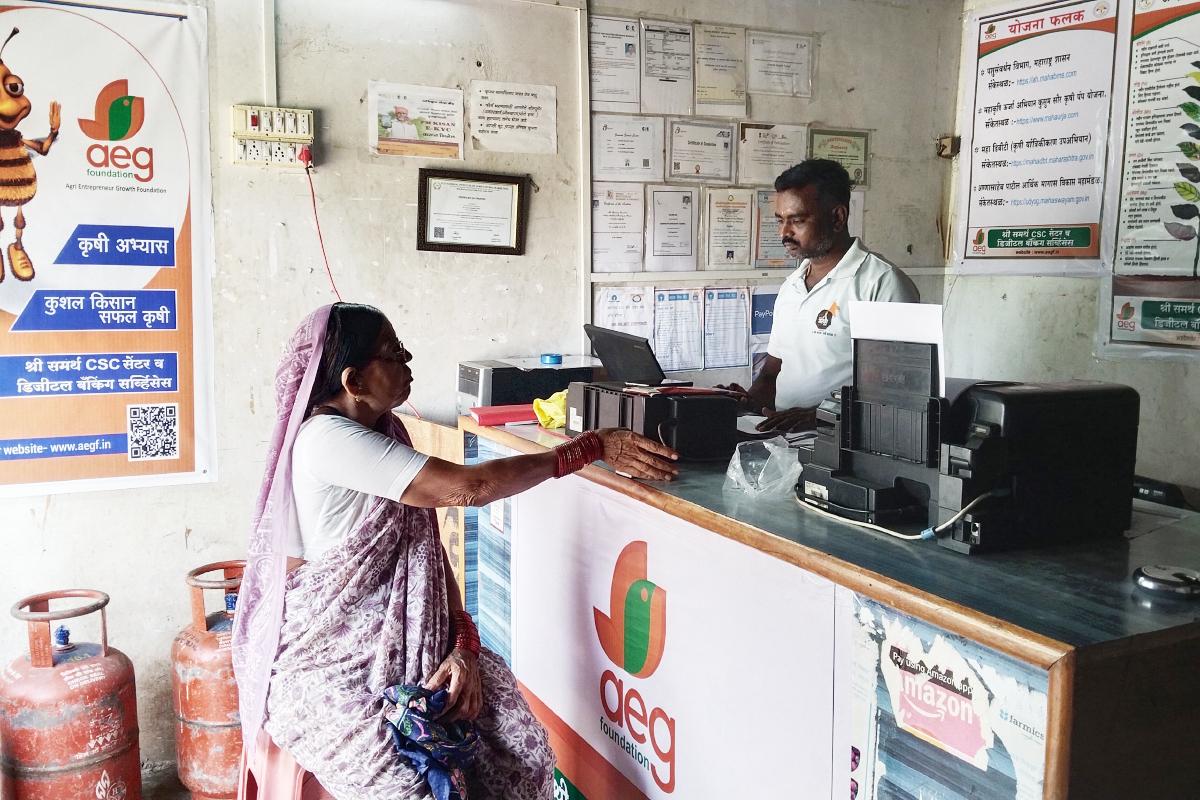
Then, he was given a new tool: knowledge. “I didn’t know how to do climate-smart agriculture,” Somnath admits. “In the training, we were told about N Balance, how to calculate it, how to convey it to farmers and help them.”
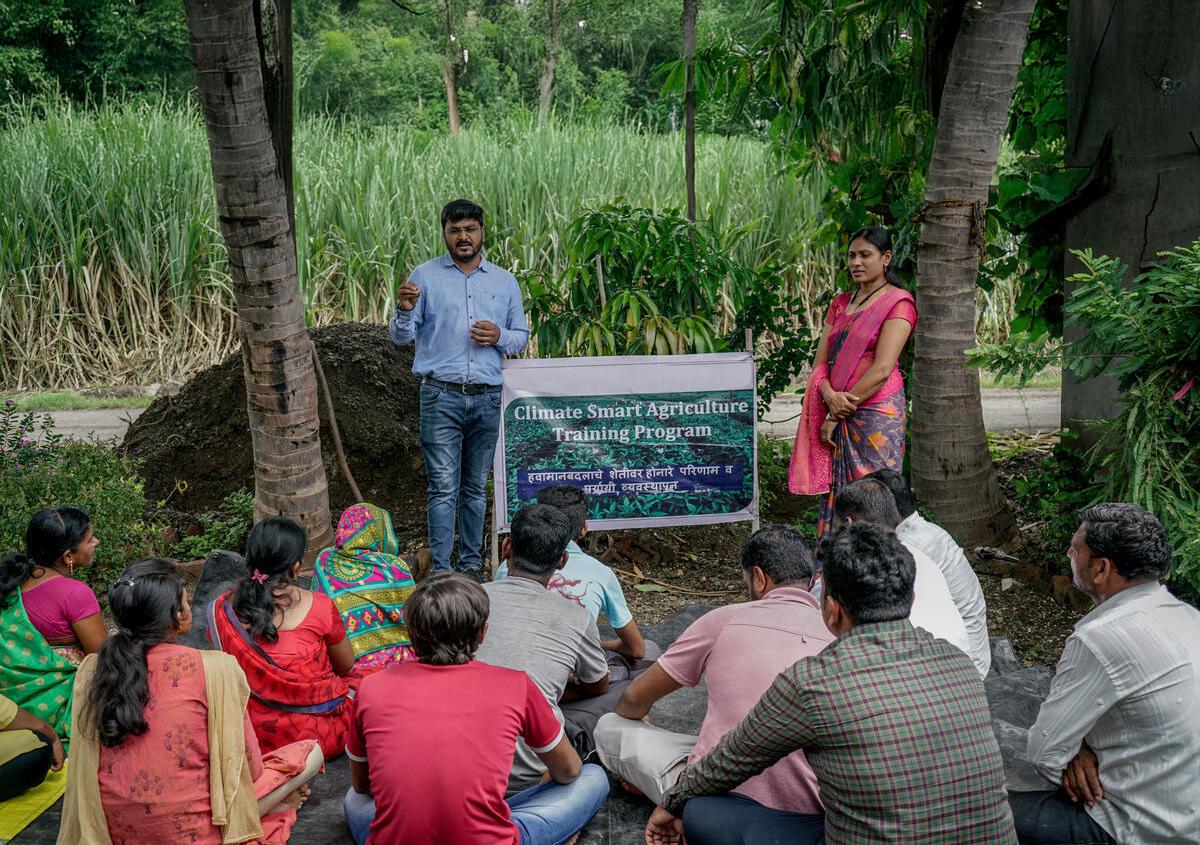
The training transformed him from a service provider into a knowledge partner. Armed with a printed advisory pamphlet generated by EDF’s system for each farmer, he would walk into the fields.
“My relationship with the farmers has improved a lot,” he says. “I go to their fields … I share this knowledge. So, the farmer is automatically connected to me.”
This connection became the capillary system through which complex climate science flowed. Mirza, who helps oversee this network, explains the logic.
“We train around 2,900 entrepreneurs in Maharashtra and, across India, we cover around 9,500 agricultural entrepreneurs.” The goal is to reach 6,000 in Maharashtra alone in the coming years. “If the farmers do better, the entrepreneurs do better. Their business is linked to the farmer’s success.”
Somnath’s credibility grew, farmers sold their produce to him and they listened when he advised them to change lifelong habits. It was a virtuous cycle engineered around trust.
A ledger of change
The final, most crucial node in this network is the farmer. This is where the data and the diplomacy are put to the test. Kushwaha, in Bihar, is the test. He joined the program at its start in 2023 and, after two cropping cycles, his results are telling.
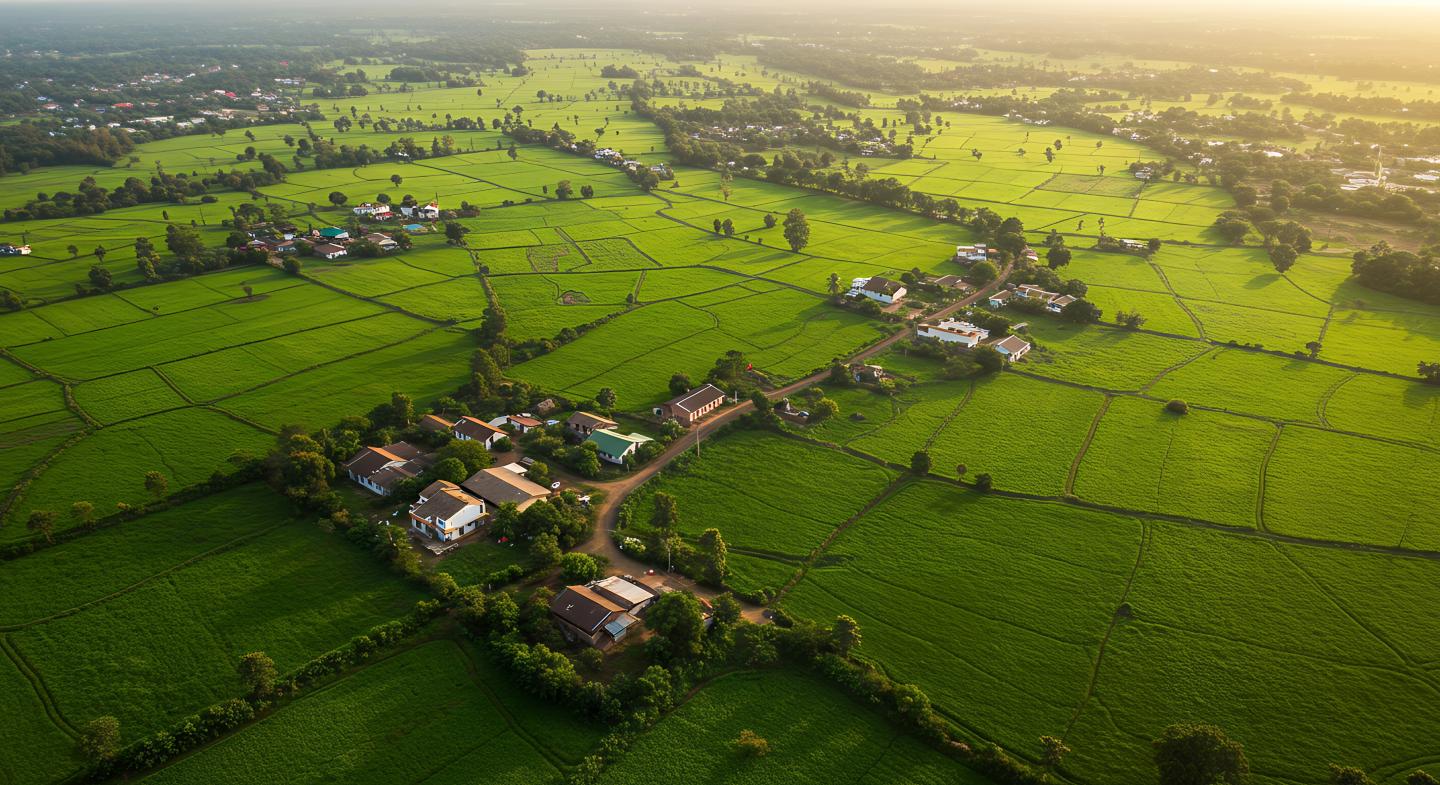
“We used to spend a lot of money,” Kushwaha says, reflecting on his fertilizer bills. When his local service provider — his “teacher,” as he calls him — advised him to cut back, he was cautious. “The teacher told me to reduce the amount of fertilizers little by little. Gradually.”
He followed the tailored advisory, a simple pamphlet that broke down the recommendations for his specific plot. “I tried according to the instructions, and the result was the same.” The yield held firm. The only thing that fell was his cost. From 5.5 pounds, he has been guided to reduce the application significantly to 2.2 pounds and even less if needed.
“We got some relief from the cost of fertilizers,” Kushwaha says.
In the precarious economics of smallholder farming, this relief is transformative. It is capital for diversification, a buffer against the next shock, a chance to breathe. His experience shatters the myth that farmers are resistant to change. They are resistant to risk. When given credible, personalized evidence that reduces their risk and their costs, they become the most effective agents of change.
“Farmers are now discussing their N Balance scores with each other,” Mirza notes with enthusiasm, describing a new culture of peer learning emerging in villages.
Optimizing with data
The work that began in 2023 with Kushwaha, Somnath, and now 60,000 farmers, is generating something perhaps as valuable as the immediate savings: a massive, granular dataset.
“This data will help us to design customized advisories to the farmers at a larger scale,” Mirza explains.
This is the scaling vision for the program’s next phase. The three-year trial, which concluded after the 2025 cycle, aims to refine the N Balance algorithm so precisely that it can be plugged into any existing agricultural digital platform in the country.
“It could optimize fertilizer for the farmers and provide tailored advisories in terms of fertilizer,” Mirza says, imagining a future where this precise tool is as common as a weather app.
The implications ripple upward. This data can help district administrations budget fertilizer subsidies more accurately, saving public funds. It provides incontrovertible evidence for policymakers on what works. It turns the abstract concept of “emissions reduction” into millions of individual, profitable decisions — like Kushwaha’s careful reduction to a more optimal measure.
Mundol sees this as the cornerstone of the future. “I will say digital soil health,” he states, when asked about the most urgent local action. “Unless we can get an accurate assessment of the health of soil at a plot-by-plot level and can give with confidence recommendations to a farmer … we’re never going to address the agriculture issue.”
Sowing a new future
The narrative of climate action in agriculture is often one of sacrifice — of doing less, of bearing loss. The EDF model flips that script. It is a story of doing smarter, guided by three principles: science, equity and economics. None, Mundol insists, can stand alone.
“Science tells us what needs to change,” he says. “Equity tells us who must not be left behind. And economics tells us whether something will last.”
Take away any one of the three, he believes, and climate action collapses. “If it hurts incomes, farmers won’t adopt it. If it ignores science, it won’t work. And if it isn’t equitable, it won’t scale.”
Instead of dramatic interventions, Mundol says, the focus is on better decisions, supported by evidence and rooted in lived realities. At the heart of this approach lies data — but not the kind that stays locked in reports. “Data only matters if people trust it,” Mundol says. “And people trust data when it reflects what they see on their fields, in their animals, in their catch.”
- At Mumbai Climate Week, solutions that can reach millions of people
- In India, an environmental solution that's good for farmers, cows and climate
For Indian agriculture, he believes the next frontier is clear. “We need granular, plot-level soil and climate data that farmers can actually use. Without that, advice will always feel generic.”
Back in Bihar, Kushwaha may not talk in terms of emissions or nitrogen cycles. But he knows what has changed. His fertilizer costs are lower. His yields are stable. And for the first time in years, he has a financial buffer against uncertainty. And the same solution that provides him that buffer is also benefitting the planet.
An earlier version of this story was originally published in The Better India.