
How do you locate a hidden environmental danger? Put a bounty on it.
What do a mysterious hole in the ground, a patch of dead vegetation and some rusty pipes have in common? They’re all clues that a forgotten oil and gas well may be close by. In Pennsylvania, these telltale signs are everywhere.
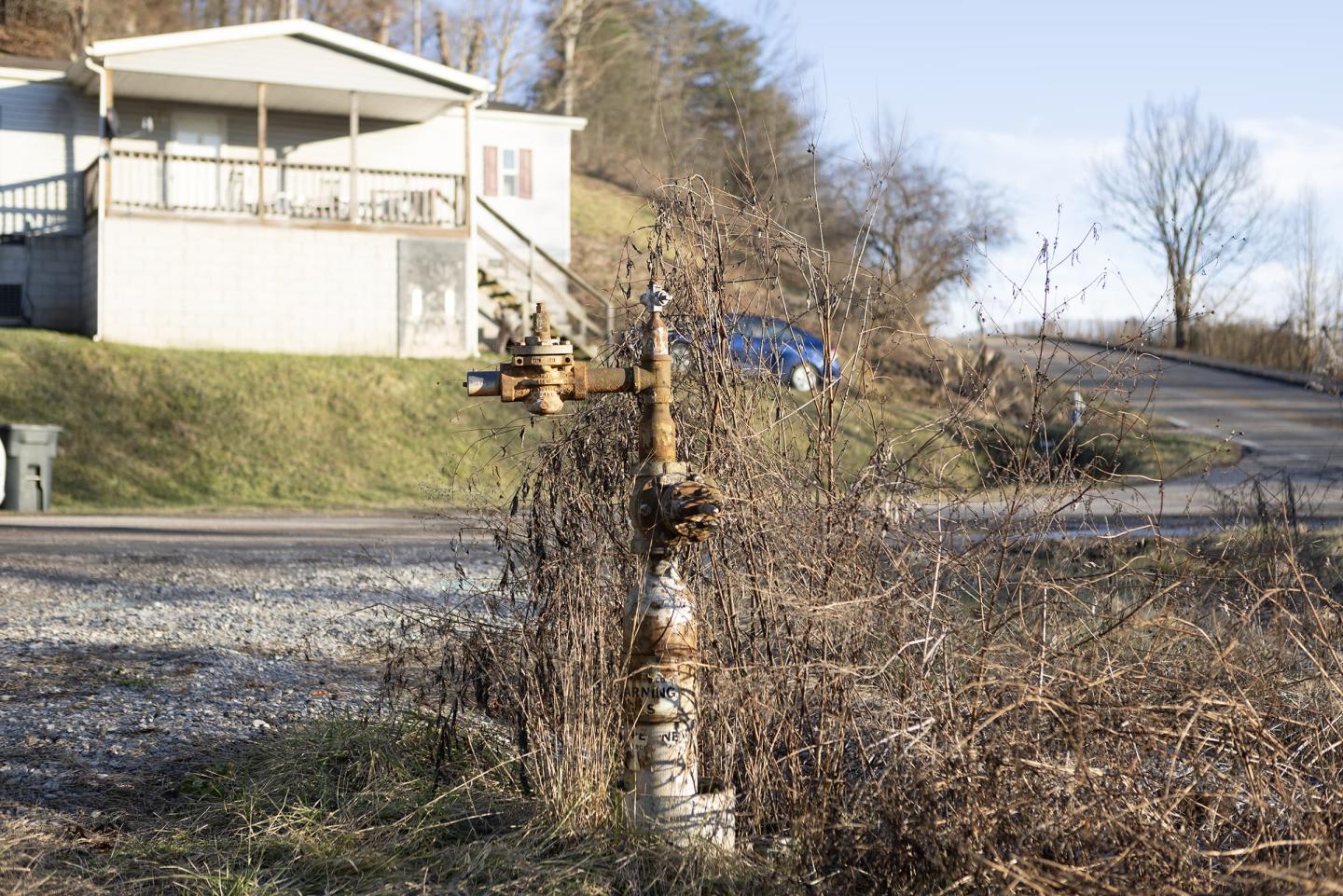
These wells are known as “orphans” — old oil and gas wells without a solvent owner on record responsible for closing and cleaning them up. They can leak contaminants into the air and water, and pose significant risks to public health and safety as well as the environment.
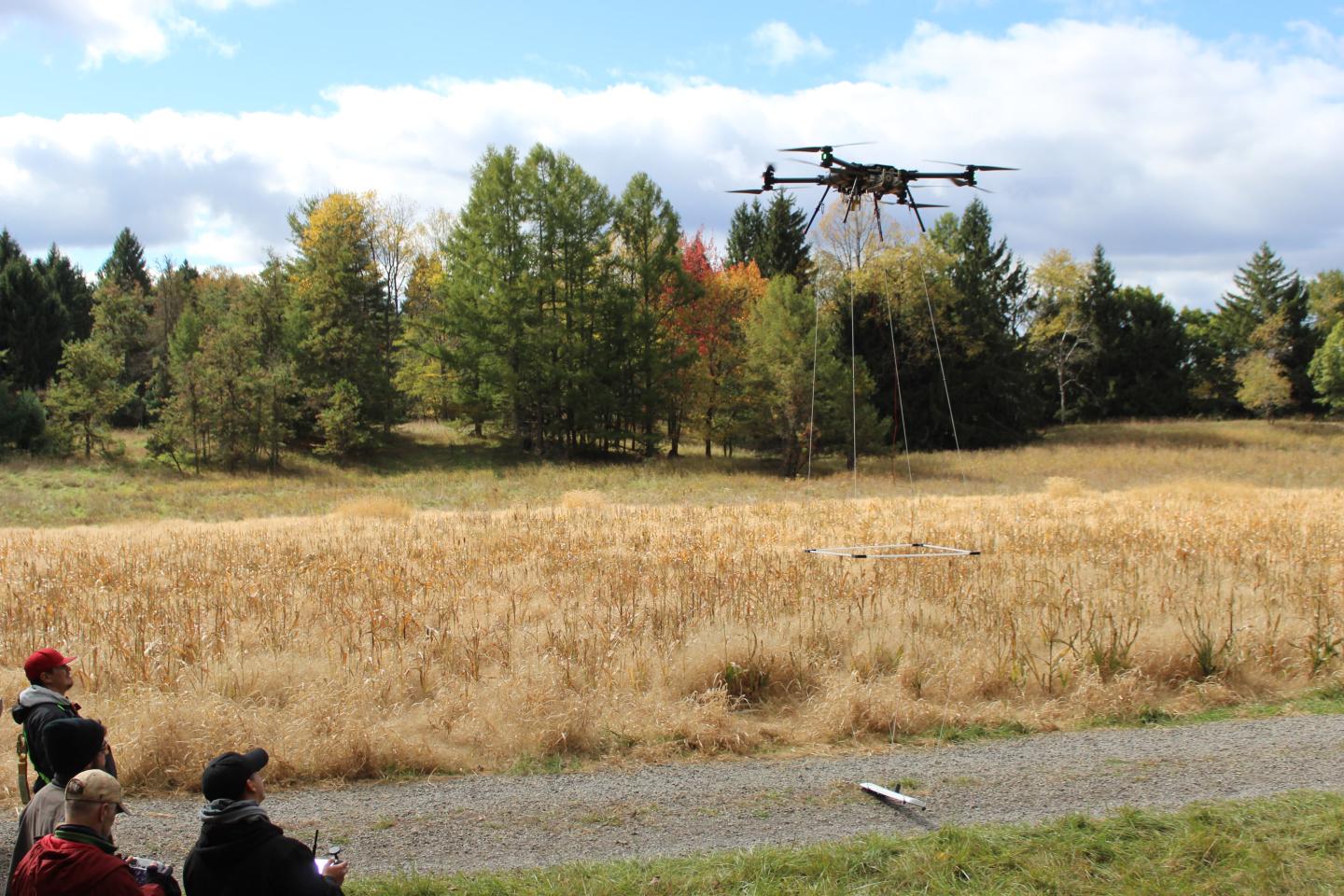
Now, with $400 million in federal funding recently made available to Pennsylvania to plug orphan wells, the race is on to find them. Last fall, the nonprofit Environmental Defense Fund used drones equipped with magnetometers, which can detect metal underground, to identify possible forgotten wells in rural northwest Pennsylvania. Soon, the group will test methods for finding wells in urban areas, where they are often buried under buildings. But last summer, a more low-tech approach uncovered more than 300 previously undocumented wells — just by asking landowners for help.
“Landowners know where these wells are on their property,” says Dan Brockett of Penn State Extension Office, who led the effort. “In this area, property has been in families for generations. Farmers know which field they can’t use their tractors on because there are pipes sticking out of the ground. Hunters know where the holes in the woods are that can sprain an ankle. It is in everyone’s best interest to get these sites documented and on the cleanup list.”
Find an abandoned well? You could get paid
Pennsylvania is home to the first commercial oil well anywhere in the U.S., drilled back in 1859. Over the next century, hundreds of thousands of wells were drilled in the state without any regulation or record. The Pennsylvania Department of Environmental Protection has documented around 30,000 such wells, but there may be more waiting to be discovered — somewhere around 300,000 to 700,000. Nationwide, estimates EDF, the number could be well over one million.
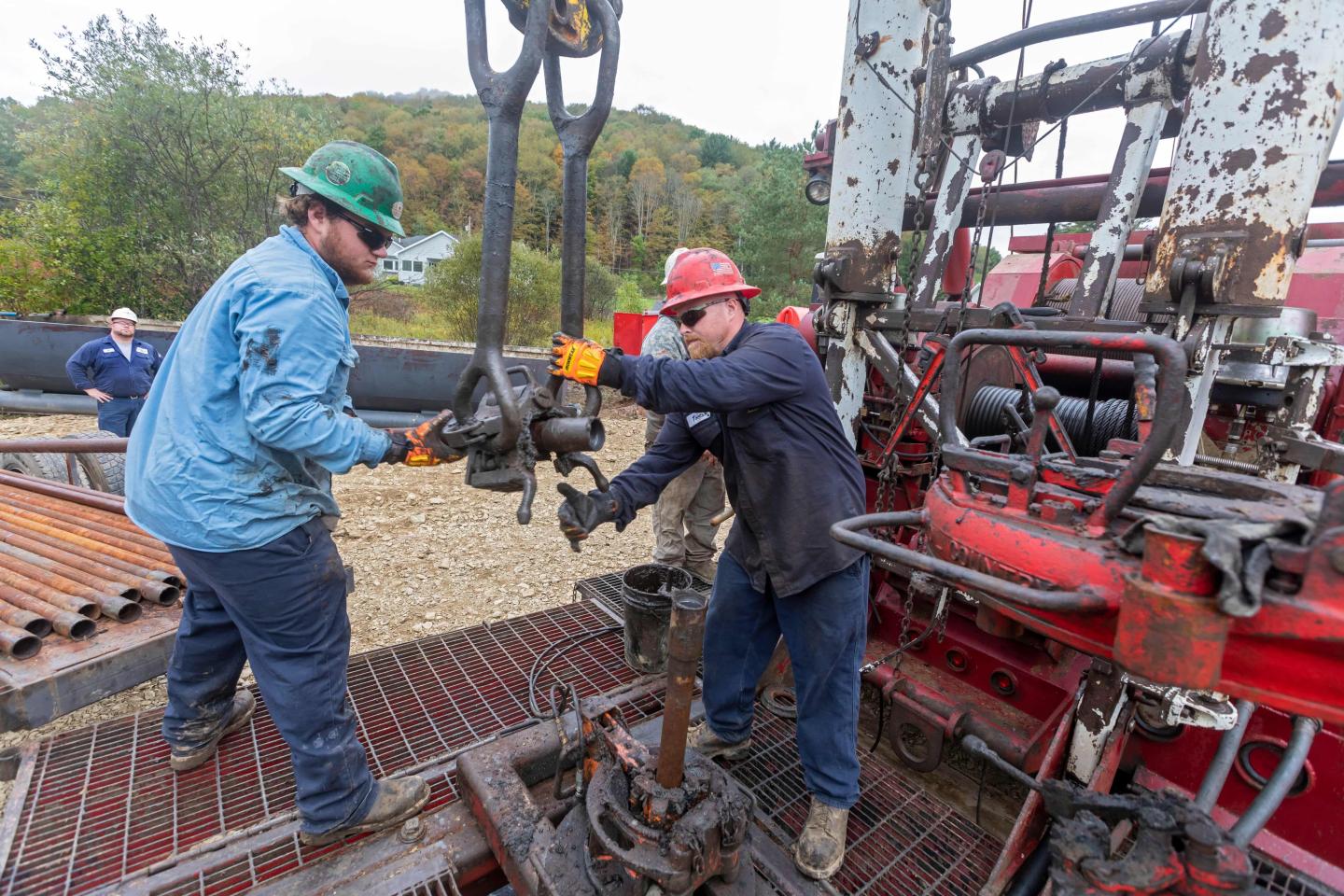
Old wells pose health and safety risks by leaking pollutants that can contaminate groundwater and pollute the air. They also leak methane, a climate super-pollutant, and flammable gas that can build up in homes and buildings where it creates the risk of explosion.
“It seems like every four or five years we hear of a house exploding in Pennsylvania,” says Brockett. “And the problem isn’t going to get better if we ignore it. It can only get worse.”
In Brockett’s program, landowners received a $100 bounty for every undocumented well reported to, and verified by, DEP. The bounty helps incentivize landowners who might be wary of getting involved with state regulators over a seemingly unproblematic pipe. One landowner Brockett worked with over the summer had around 50 wells on his property.
“There’s a lot of apprehension among landowners about reporting wells on their property because there is this fear that they will be on the hook for fixing them,” Brockett explains.
For an individual, the cost can be daunting. Plugging an orphan well involves injecting concrete underground, and can cost anywhere from a few thousand dollars to more than $100,000. The good news is that unless it is specifically included in the deed to the property, landowners are not responsible for plugging wells on their land. And when wells are reported and plugged, it can actually help raise property values.
Over the past two years, thanks to federal funding, Pennsylvania has plugged over 300 wells that were previously documented. That’s more than all the wells the state plugged over the prior decade.
“By plugging these orphan and abandoned wells, we can create jobs, raise property values, cut pollution, tackle climate change, improve our health and create a brighter future for all of us,” says EDF’s Meg Coleman, who helps lead the organization’s orphan well work.
Environmental news that matters, straight to your inbox
More states take action
EDF is also involved in a five-state push to strengthen and enforce regulation to make sure oil and gas wells are plugged at the end of their useful lives by oil and gas companies themselves, with their own money, so that those wells don't become orphaned and fall to the public to clean up.
Thanks to these efforts, the Texas state legislature passed a law in June 2025 that, for the first time, places a limit on the number of years that an oil and gas well can be kept in inactive status — a limbo state during which a well produces no oil or gas but plenty of methane and air pollution. The new law sets a deadline by when such wells must be revived or plugged. It’s a promising step toward reining in pollution from the 115,000 inactive wells in the state. A similar law was also passed this summer in Oklahoma.
In Utah and New Mexico, EDF has been working with state regulators and partner organizations on new rules that will require oil and gas operators to either plug or provide financial assurance to the state for wells at risk of becoming orphan wells. These rules are in the final stages of negotiations and expected to go into effect in 2026.
In other drilling heavy states like Louisiana, EDF is working with state officials to get rules that are already on the books properly enforced and potentially strengthened in the future.
While efforts to prevent wells from becoming orphaned gain ground, using all the tools available to locate legacy pollution remains the focus in Pennsylvania.
“For every well we find, we know there are ten more like it out there,” says Brockett. “We need to use all the solutions out there to find them. Sometimes that’s going to be drones and high-tech metal and methane detectors. Other times the solution is just talking to our neighbors.”