
Ask an expert: Can US cities blame their poor air quality on Asia?
The Trump EPA recently exempted Phoenix from stricter clean air rules by blaming the city’s smog-forming, lung-damaging ozone pollution on sources in Asia. Salt Lake City may soon get the same exemption. Both cities have ozone levels that exceed national air quality standards.
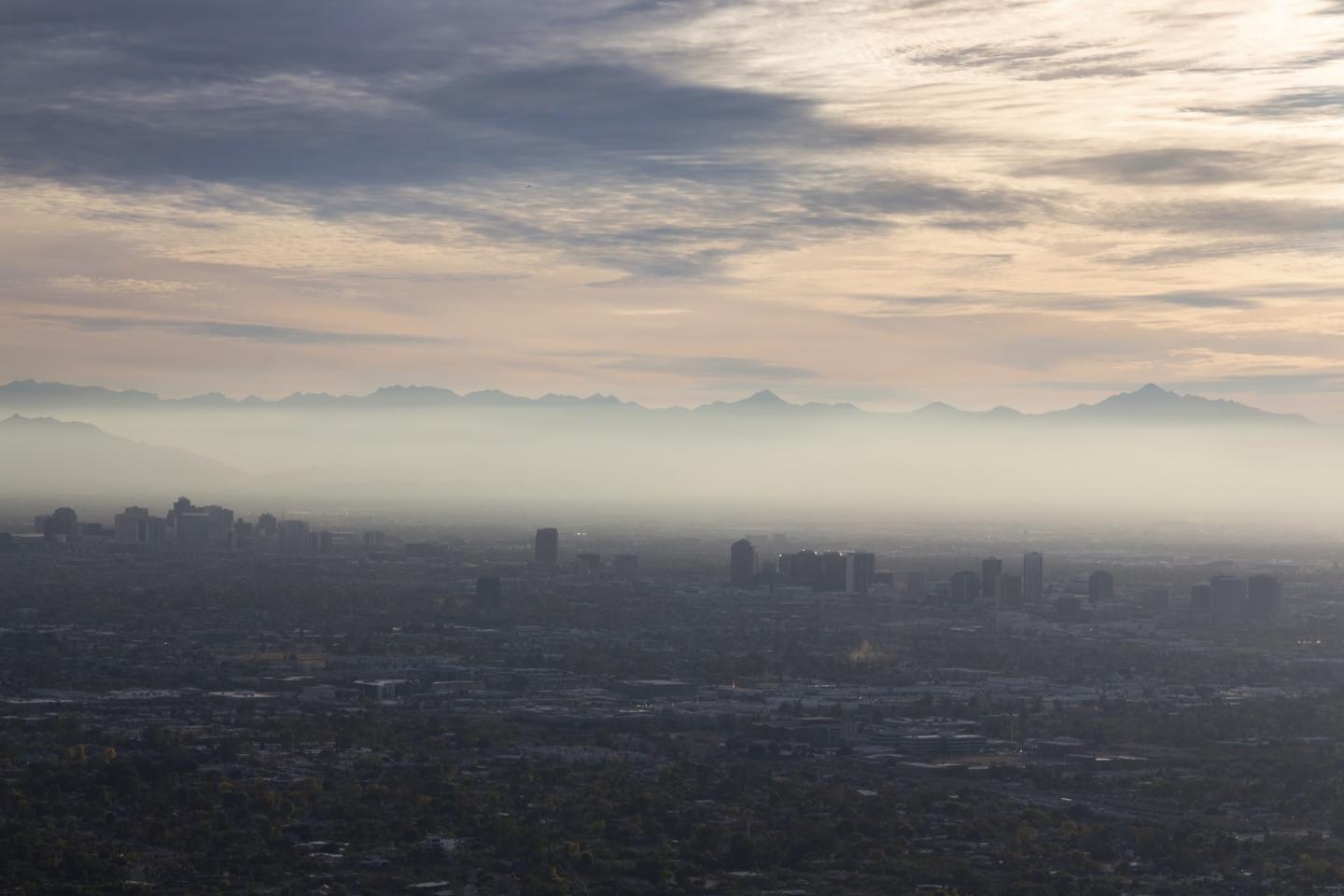
But can pollution from Asia really be blamed for poor air quality in American cities?
Dr. Tammy Thompson, a senior scientist at Environmental Defense Fund, a global, science-based nonprofit, studies how air pollution moves and what makes it vary at a hyperlocal level — street by street or block by block.
She helped create Air Tracker, a real-time map that tracks sources of pollution in cities around the world, including in Salt Lake City. We asked Dr. Thompson to explain what’s really going on.
First, does air pollution really travel to the U.S. from other countries?

Yes. Global models show that ozone pollution drifting into the United States from sources outside the country is a real phenomenon. And, for that matter, air pollution from the U.S. can drift into other countries, too. But that’s only part of the story.
Utah’s own modeling shows that ozone pollution from Asia makes up just a small share of the total in Salt Lake City — about 6 to 7% — while local sources contribute roughly 20 to 25%, making them a much bigger contributor to Salt Lake City’s poor air quality.
If the Trump EPA allows cities like Phoenix and Salt Lake City to subtract foreign emissions in order to artificially claim compliance with federal standards, the EPA removes an incentive for U.S. cities to continue working on the real, local solutions that protect residents from air pollution.
Environmental news that matters, straight to your inbox
In addition to putting peoples’ health at risk, what are the other potential impacts of creating this air quality loophole?
Trying to lay the blame somewhere else only delays real solutions. "Blame Asia" is not an air quality management strategy. Every country that extracts or burns fossil fuels contributes to ozone pollution and smog globally. That's why EDF works with countries around the world to tackle air pollution. It’s a shared problem that we all need to work together to stop.
What’s a better strategy? Could EDF's Air Tracker tool help cities reduce air pollution?
Yes, Air Tracker is designed to track local sources of pollution and helps regulators to see exactly where pollution is coming from. On high air pollution days, Air Tracker can identify the largest sources of pollution in real time. On cleaner days, Air Tracker can be used to find the source of local hotspots of pollution. It’s currently available in 10 U.S. cities.