
These villages protected their forests. Now they’re seeing the financial benefits of climate action.
In Ghana and beyond, tropical forest finance programs are converting emissions cuts into tangible benefits for local people.
In Awisa, a village in western Ghana’s cocoa belt, footpaths of red earth wind from small houses to a shallow, muddy hole in the ground. “Until recently, our animals and us were drinking from this same water source,” says resident Aishetu Ibrahim. “After washing in it, we would fetch it in buckets to our homes.”
The degraded water source was one symptom of a larger ecological unraveling. Years of clearing for farms and firewood had stripped the surrounding tropical forest, leaving soils exposed, streams choked and cocoa trees withering.
Ten years ago, the village began to reverse course, protecting forest trees and planting shade trees with support from Ghana’s Cocoa Forest REDD+ program and other international partners. The trees grew quickly, and as the canopy closed in, the land began to recover — retaining water, cooling crops and drawing planet-warming carbon dioxide back out of the air.
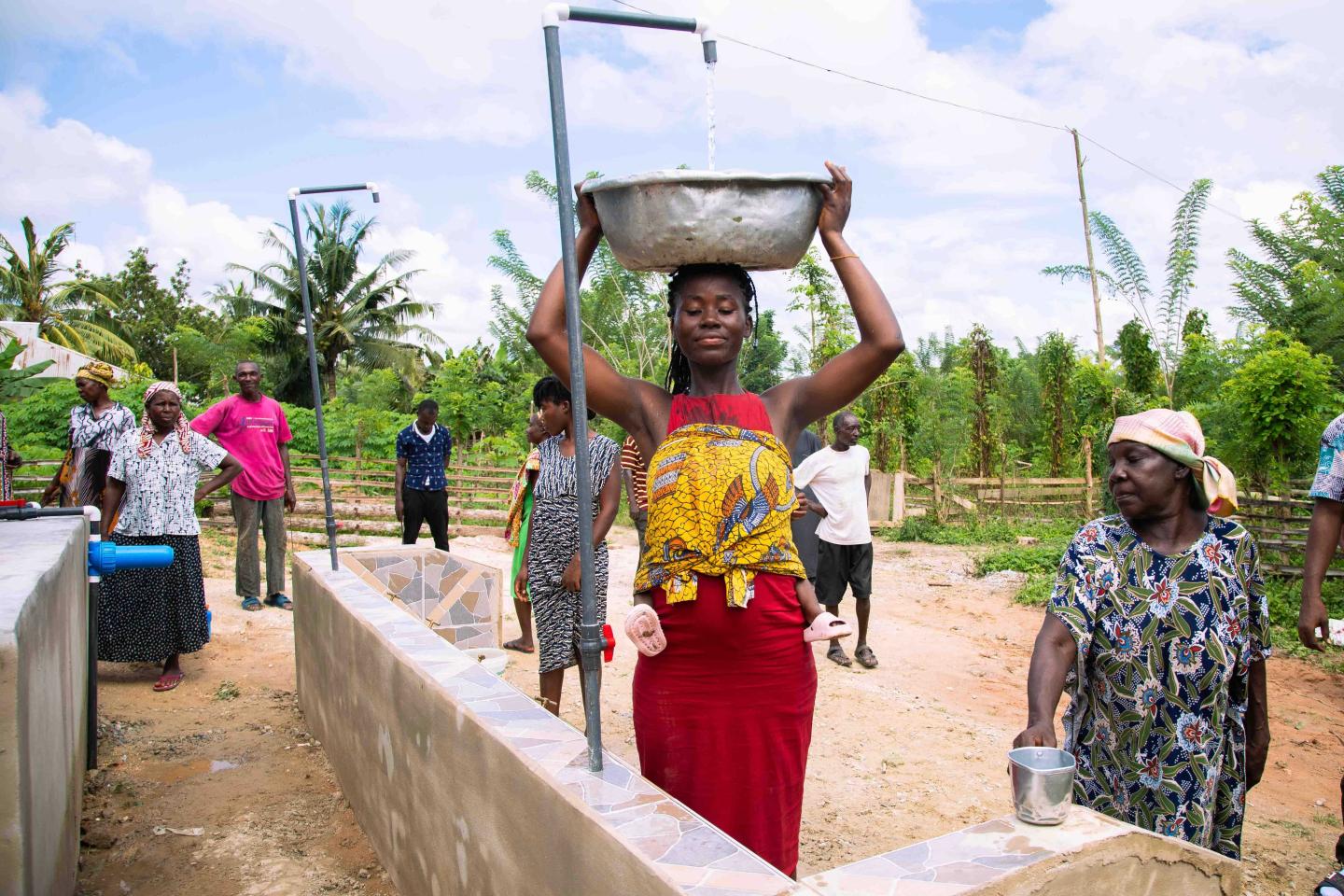
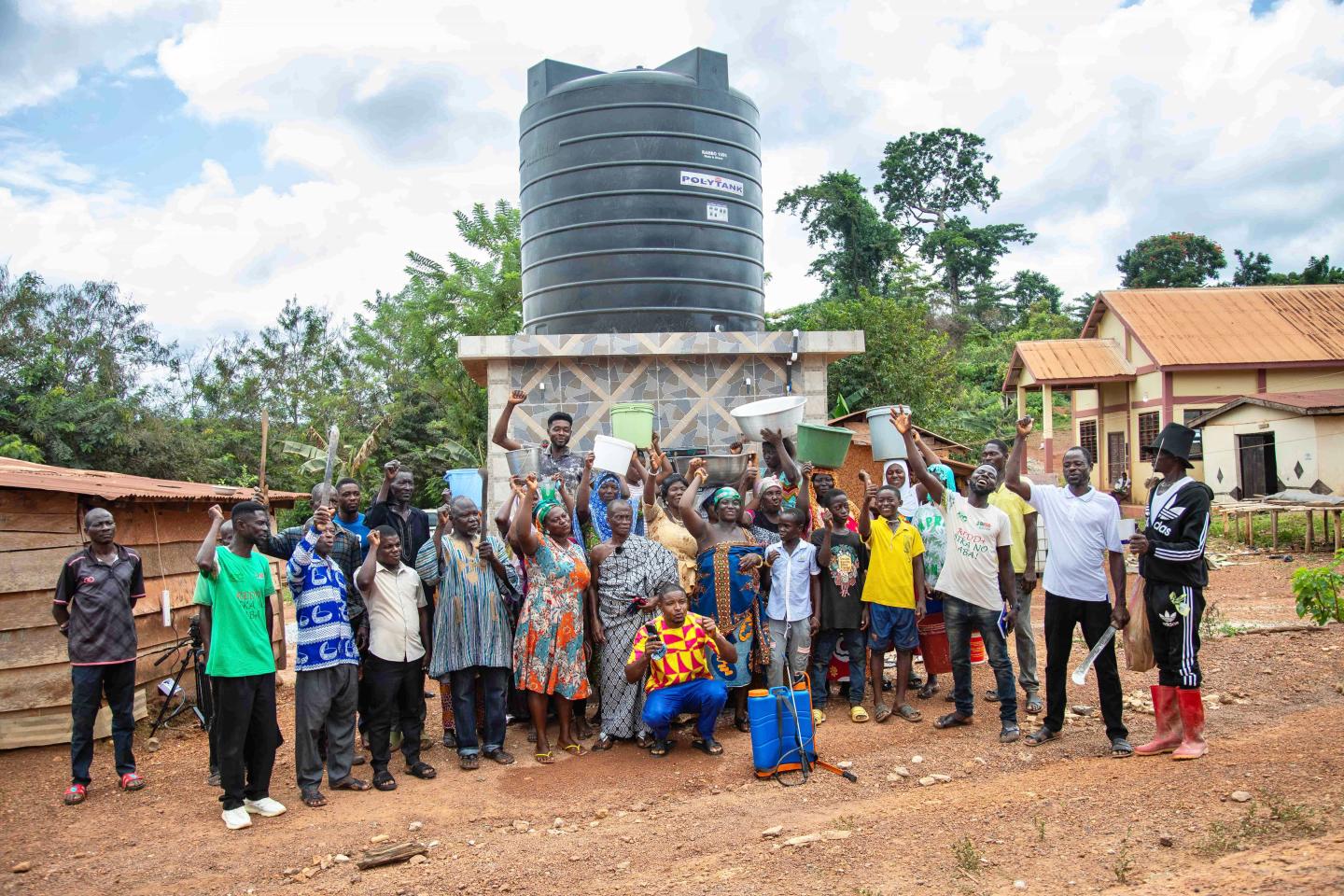
Rebuilding a damaged ecosystem is slow work, and climate rescue slower still. But villages like Awisa began to see practical returns within a few years. Through a tropical forest finance program rooted in REDD+, the U.N.-backed effort to reduce greenhouse gas emissions from deforestation and forest degradation, the climate impact of the village’s forest protection work was quantified and verified, unlocking funds that flowed back to the village. Residents of Awisa used part of their proceeds to drill a deep well and install a hand pump. Now, at dawn and dusk, residents line up with bright containers, and the steady clank of the handle fills the air. Farmers can irrigate seedlings to diversify their crops and waterborne illnesses have declined.
“Now that we have water, everything is smoother for us,” Ibrahim says.
From a distance, programs such as REDD+ can look like a thicket of complex standards and tortured acronyms. On the ground, they look like clean water in Ghana, more productive farms in Vietnam and solar mini-grids lighting schools and clinics in Guyana.
Under the REDD+ platform, major forest-finance programs are now delivering results for communities on the front lines of forest protection. Their mechanics differ, but the premise is the same: countries that keep forests standing can earn money for proving they reduced deforestation and kept more carbon locked in trees and soils.
That money generally comes from governments and companies — often in wealthier countries — who pay for verified emissions reductions as part of their own climate commitments.
“There’s no way to stabilize the climate without protecting tropical forests,” says Santiago García, who directs forest partnerships at Environmental Defense Fund, a global, science-based nonprofit. “And there’s no way to do that effectively without partnering with the people who live in them and making sure they benefit materially.”
Ghana shows how that principle plays out. As of 2024, the country had received and distributed more than $20 million through the Forest Carbon Partnership Facility, with 69% flowing directly to farmers and communities after program costs and payments to the Ghana government. That money returns to the landscapes that produced it — helping farmers raise yields on existing land, plant shade trees and invest in priorities they choose, such as access to clean water.
Environmental news that matters, straight to your inbox
Incentives for forest conservation
Modern forest-finance programs do not ask people to accept poverty as the price of conservation. They tie forest protection to improvements in daily life, especially for women and children, who often bear the burden of fetching water and the consequences of poor maternal care.
Roselyn Adjei, an EDF consultant who directed REDD+ programs for Ghana’s Forestry Commission, recalls accompanying foreign officials to a cocoa-growing village. One visitor questioned the use of conservation funds to drill and install new wells. Residents led them to their old water source. The answer was in the mud.
“If we don’t have good health, how do you think we’re going to care about the forest?” Adjei recalls the villagers saying.
That same understanding is shaping forest finance elsewhere. In the South American country of Guyana, more than 240 Indigenous villages and communities are part of a national benefit-sharing system funded by forest-carbon revenues.
Guyana’s Low Carbon Development Strategy is a national plan to turn the value of standing forest into cash for development without clearing the forest itself. Carbon-credit revenue has already helped support more than 1,300 village-led projects. In a country where about 85 percent of the land is still forested — roughly 44 million acres — Guyana has kept more than 99.5 percent of that forest standing and has begun earning carbon revenue for doing so.
In northern Guyana, the small Indigenous village of Sebai used carbon-credit revenue to help fund solar mini-grids that now power schools, health centers and village offices. In Great Falls, carbon-credit revenue went into investments in sustainable logging, furniture-making and production of crops that supply the local school kitchen. Other Guyanese communities have used the money to support low-impact tourism, upgrade sustainable forestry capabilities and strengthen village agriculture.
García’s team at EDF is working in Ecuador, Brazil, Mexico, Vietnam and Nepal to shape new carbon-finance programs so they are fair to local people and designed to hold up over time. To ensure that climate benefits are real, independent auditors must verify the numbers before any carbon credits are issued — one credit for each metric ton of carbon dioxide kept out of the air.
Beyond the emissions math lies a harder question: Who gets heard in the decision-making process? And who gets paid? In Ecuador, EDF and local partners are working with Indigenous and Afro-descendant groups to help them build a forest-finance framework that ensures those communities most closely tied to the forest are consulted and receive a fair share of the benefits.
A movement gaining ground
Much more remains to be done, especially in Africa, where forest loss remains stubbornly high. Africa lost about 9.6 million acres of forest per year between 2010 and 2020, according to the UN’s Food and Agriculture Organization.
Ethiopia has launched one of the more ambitious efforts to reverse that trend. In 2019, Prime Minister Abiy Ahmed introduced the Green Legacy Initiative, designed not just to plant trees, but to restore degraded land, rebuild ecosystems and make the country more resilient to a hotter, harsher future. It also encourages more sustainable practices across agriculture, forestry, energy, transportation and water use.
The scale of Ethiopia’s accomplishments is impressive. The country has planted more than 48 billion seedlings since the initiative began. Its latest forest-cover mapping report also points to a steep drop in annual forest loss, from roughly 227,000 acres a year in the 2001–2014 period to about 68,500 acres a year in 2020–2023 — cutting the annual rate of loss to less than one-third of what it was.
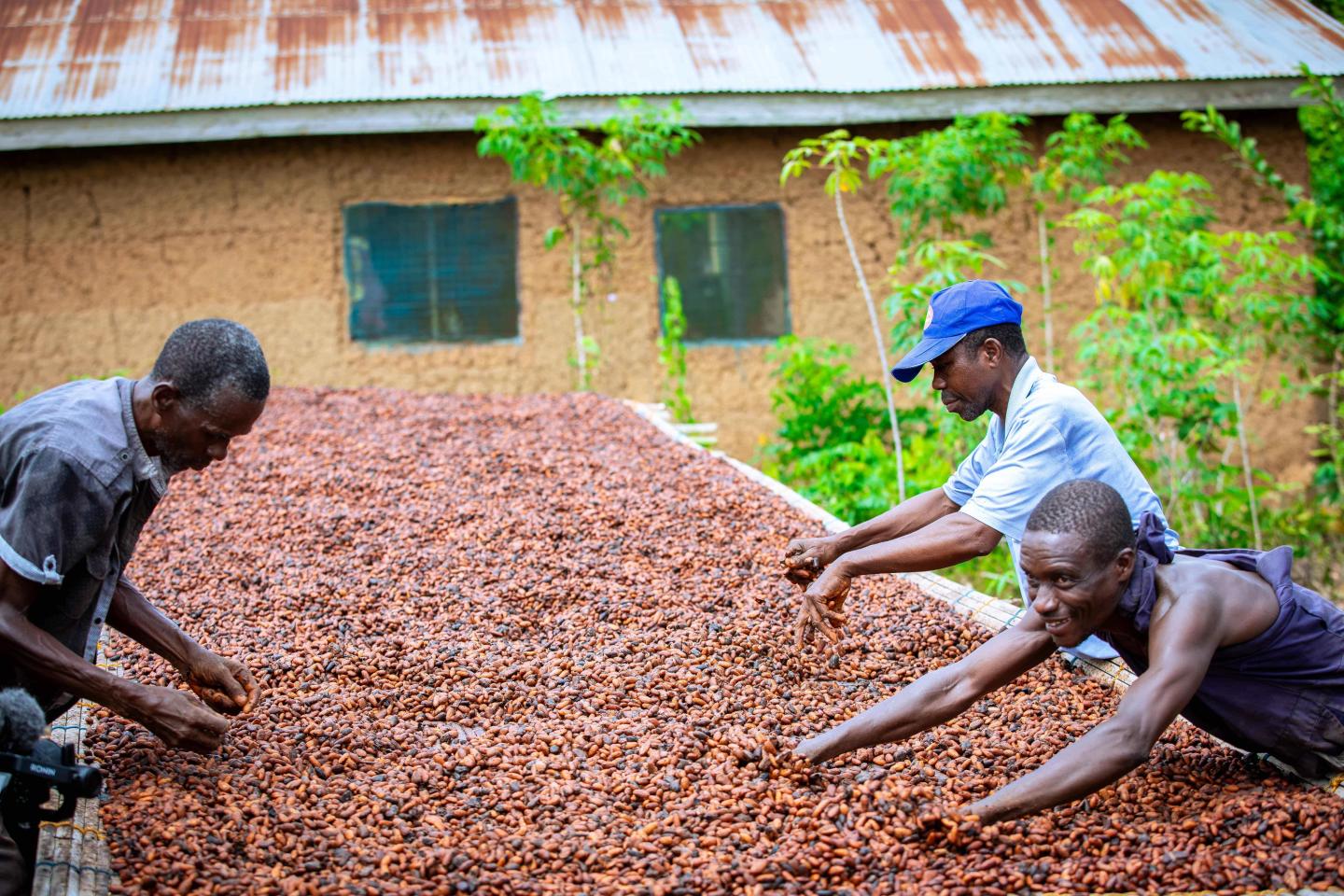
Back in Ghana’s cocoa belt, communities receiving carbon payments have organized and learned new skills as a result. They’ve set up committees, opened district bank accounts and decided how to divide funds to accommodate shared needs.
The payments are not a handout. Ghana earns money by cutting emissions through forest protection and restoration. The more forest it keeps standing and the more degraded land it brings back, the more carbon stays out of the atmosphere — and the more the country can earn. Under a World Bank agreement, Ghana can receive up to $50 million for reducing 10 million tons of carbon dioxide, with payments tied to results measured on the ground.
The benefits are visible in practical ways. In Assin Nuanua village, a new maternity ward built with forest payments now serves 20 to 30 patients a month. “It is making our job easier and making deliveries safer,” says health worker Dorcas Quayeson.
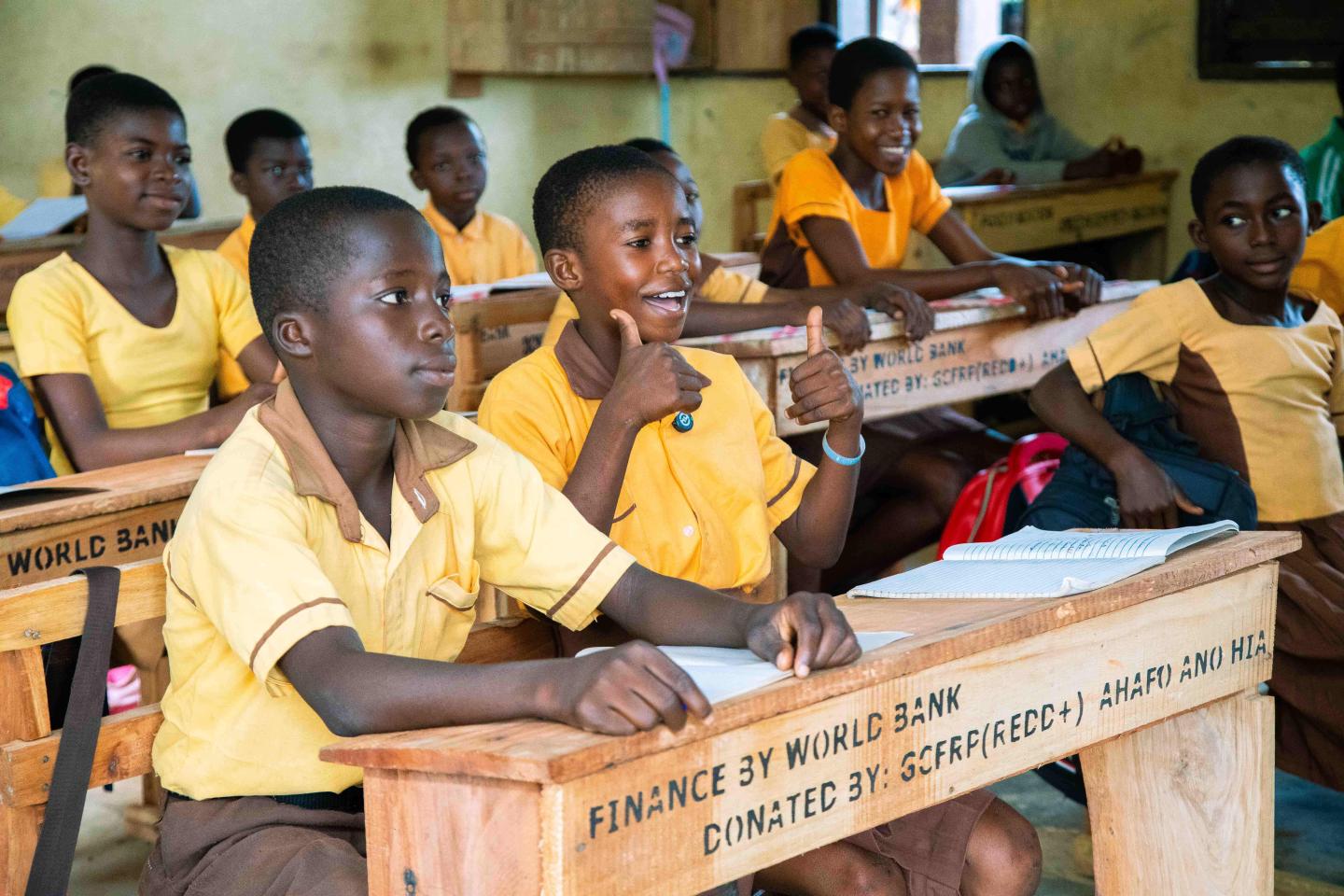
At Betenase Technical School, student AJ Amaro remembers the long daily walk to streams to fetch water before school. “It was difficult for us to get to our classrooms on time,” she says. The new well has given students hours back to focus on their studies.
By easing the daily burden carried by rural residents, conservation feels less like an external demand and more like a shared investment.
“The protection of forests is what built this school, this borehole, this maternity ward,” says Adjei. “People see that cause and effect, and now they are pushing to do more: plant more forests, protect the ones they have. The momentum is clearly building.”
That is the logic behind forest finance: that countries can earn more by keeping forests alive than by cutting them down, and that the people living closest to those forests can share in the returns. If the momentum behind that approach continues to build, the payoff could be enormous — for the climate, and for the nations building a more durable future under the canopy.