

Report finds FDA allows 25 chemicals linked to cancer to be used in US food system
Could a dangerous chemical be lurking in your morning coffee? A recent report by the experts at Environmental Defense Fund found that the U.S. Food and Drug Administration has been allowing 25 chemicals linked to cancer into America’s food system.
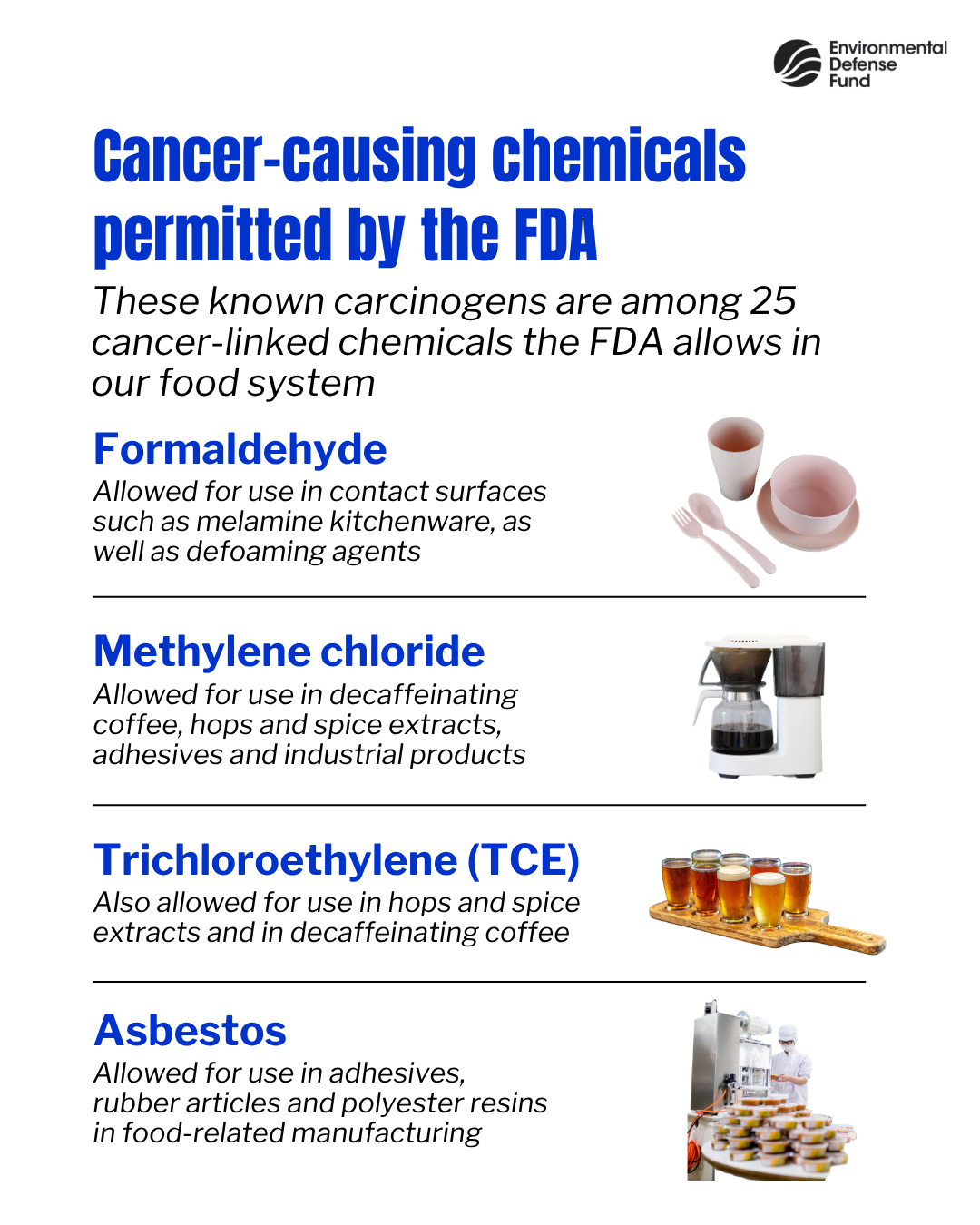
Most are used in packaging or processing, but research shows many can migrate into the food itself. Eight of the chemicals identified by EDF are known human carcinogens and 17 are probable human carcinogens.
We sat down with Maria Doa, EDF’s senior chemicals expert, to find out more about the risks and what you can do to protect yourself. Doa has spent more than 30 years protecting the public from toxic chemicals, including several decades as a leader at the EPA.
“These substances should be nowhere near our food,” Doa says.
Why did Environmental Defense Fund do this research?
We believe the FDA is putting people at risk. By law, the agency is required to ban food additives that cause cancer in humans or animals. While many of the chemicals we looked at are not added to food as ingredients, research shows that many of them can migrate into food during processing as well as from packaging, including plastics, paperboard, metals and coatings.
Here’s one concerning example: Methylene chloride, which has been used as a paint stripper, is so dangerous that the EPA has banned its use in most instances. But the FDA still allows it to be used to decaffeinate coffee and tea.
How can something be restricted by the EPA but not the FDA?
This is a point I’ve raised with FDA leaders many times. But the FDA, not the EPA, regulates chemicals in food, and their failure to act shifts the burden of toxic chemicals onto consumers, with estimated health costs reaching up to $2.2 trillion every year.
The agency’s inaction is even harder to accept when you consider that many people are exposed to these same carcinogenic chemicals from multiple sources every day — in their food, air and water — and that cumulative exposure isn't a risk they even consider. That is a huge regulatory gap. Plus, in many cases, safer substitutes are readily available.
Is there anything consumers can do to protect themselves?
First, I want people to know that consumers shouldn’t need to figure out how to protect themselves. By law, that is the FDA’s job.
But there are some practical steps to take: Eat fresh, unpackaged fruits and vegetables and limit highly processed, packaged foods. Avoid microwaving food in plastic and look for coffee or tea decaffeinated without chemicals — for example, using the Swiss Water Process.
Why isn’t anyone stopping this? What can the average person do?
The number one thing we can all do is urge the FDA to do its job and ban cancer-causing ingredients in food. EDF has been advocating this, providing research and testifying in front of Congress and FDA officials. You can sign EDF’s petition urging the FDA to take action at EDF.org/SaferFoods.
Consumers can also talk directly to corporations. Ask a brand you like if they are using methylene chloride during processing, for example. Find out about the coatings and can linings used and ask how they determined them to be safe. Last, talk to your friends and family about this issue. If enough of us make noise, we can get the FDA to act.