
The fight over America’s most important chemical safety law, explained
In 2017, Wendy Hartley lost her 21-year-old son, Kevin, to methylene chloride exposure when he was overcome by fumes while refinishing a bathtub at work.
After seven years of meeting with lawmakers and telling her son’s story, the Environmental Protection Agency limited the use of methylene chloride in 2024 under the Toxic Substances Control Act. Finally, other families would be spared a similar tragedy.

“Kevin saved four lives as an organ donor,” Hartley says. “And he continues to save more lives with his story. That’s his legacy.”
But if a Republican-backed bill to weaken the Toxic Substances Control Act gains traction in Congress, other families will be at risk. While methylene chloride would remain restricted, proposed changes to the law would make it harder to protect the public from other toxic chemicals.
That includes headline-making vinyl chloride, which came under scrutiny in 2023 when a train carrying the toxic substance crashed in East Palestine, Ohio. Years later, many residents still fear for their health.
“A weaker Toxic Substances Control Act wouldn’t only impact new chemicals. It would also make it harder for the EPA to restrict some of the worst chemicals already out there, including ones being evaluated by the EPA right now,” explains Environmental Defense Fund’s chief chemicals expert Maria Doa. Doa has spent more than 30 years protecting the public from toxic chemicals, including several decades as a leader at the EPA.
What is the Toxic Substances Control Act?
The Toxic Substances Control Act gives the Environmental Protection Agency authority to review chemicals for safety and ban or restrict the ones that pose an “unreasonable risk” to people’s health or the environment.
Originally passed in 1976 — and significantly strengthened in 2016 — the law is the reason the EPA has been able to regulate some of the most dangerous substances in modern history, including cancer-causing asbestos, trichloroethylene — a degreaser also linked to cancer — and methylene chloride, which can kill in minutes.
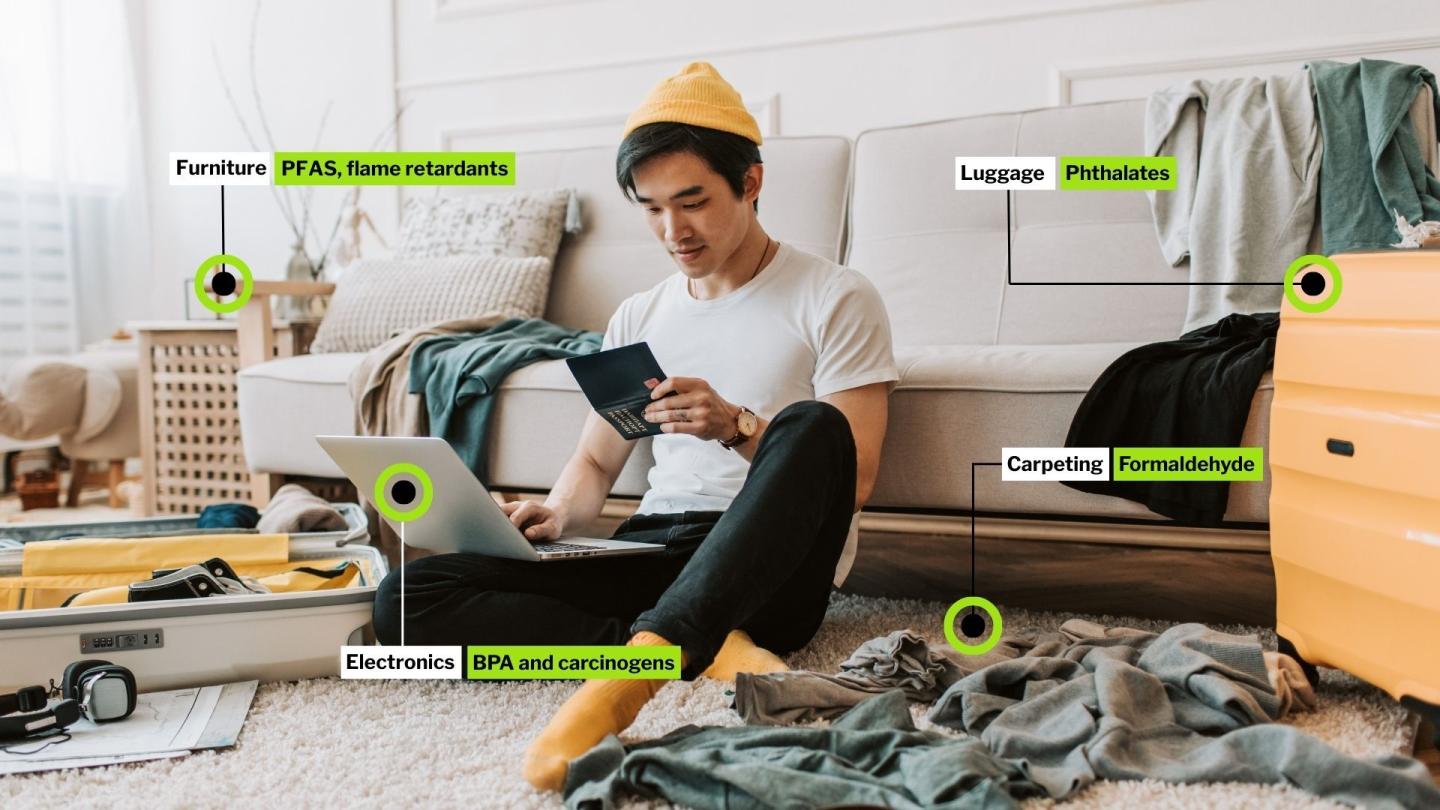
But, right now, a quiet battle is unfolding over the future of the Toxic Substances Control Act after Republicans in both the House and Senate released draft proposals that would weaken the law, which is meant to keep dangerous chemicals out of everything from plastic toys to furniture to electronics.
Why are Republicans trying to weaken the Toxic Substances Control Act?
The Toxic Substances Control Act is not a controversial law. In fact, it enjoys overwhelming public support.
A recent poll showed that 82% of Americans support the law across party lines. Plus, more than 70% of adults in the U.S. say they are concerned about exposure to toxic chemicals and five in six want government and businesses to do more to ensure chemical safety.
Why weaken a law that protects people from toxic substances? Much of the momentum is coming from chemical industry lobbyists.
“The Trump administration’s deregulatory, polluter-first agenda has created a political opportunity for the chemical industry to push to weaken the government oversight required by the Toxic Substances Control Act,” explains Suhani Chitalia, who helps lead federal affairs at EDF.
The chemical industry claims that EPA safety reviews slow down innovation. But health and environmental advocates say the “slows innovation” argument is familiar — and flawed.
“There’s a long history of health problems caused by chemicals considered ‘innovative’ when first introduced,” says EDF’s Doa.
Last year, Doa testified before House lawmakers that when polychlorinated biphenyls (PCBs) were introduced in 1929, they were hailed as a breakthrough — and widely used in electrical equipment because of their fire-resistant properties — until they were banned in 1979 for being highly toxic and causing cancer.
Today, almost 100 years later, they still linger. Up to 14 million U.S. students are estimated to be in schools that still have PCB-containing materials in the caulk or electrical work.
Another example is PFAS, better known as “forever chemicals.”
PFAS stands for per- and polyfluoroalkyl substances. They can be found in everything from nonstick pans to carpets, because they repel grease, water and oil. But these entirely man-made chemicals never break down. They build up in soil, waterways and our bodies, where they wreak havoc on our immune and reproductive systems. One study found that women with higher levels of PFAS in their blood had a 40% lower chance of becoming pregnant.
“Forever chemicals are in our water, soil and food,” explains Doa. “They cause harmful effects at very low levels and are linked to cancer and developmental issues for kids.”
The U.S. government has already spent billions of dollars trying to clean up forever chemicals, which is why many health experts were shocked and confused when the Trump EPA approved PFAS-containing pesticides for use on major crops, like corn, in 2025.
Environmental news that matters, straight to your inbox
What’s in the proposed bill?
Draft text revising the Toxic Substances Control Act has been released by Republicans in both the House and Senate. Health experts who’ve seen the text have raised concerns about the amount of influence the proposed changes would give the chemical industry over how safety reviews are conducted – even allowing the EPA to consider industry-led studies when making safety determinations, which can result in bias and make it harder for the agency to accurately assess risk.
“Alarmingly, the proposal also opens the door to ‘comparative risk assessments,’” says Doa. “This means if the EPA finds significant risk with a chemical, a chemical that is even marginally less harmful than one on the market — say, 5% less toxic, but still incredibly dangerous for people to be exposed to — could sail through approvals.”
Another change raising concern would allow regulators to assess chemical exposures in isolation from each other, rather than considering how people are actually exposed to chemicals in the real world.
“To your body, it does not matter whether your exposure to a chemical comes from a consumer product or from your drinking water,” explains Doa. “Artificially breaking exposures into isolated pieces can lead regulators to underestimate risks, leaving dangerous levels of exposure in place.” She offers a simple analogy: It would be like trying to lose weight by counting calories only at meals but not including snacks. To truly understand the health effects of a substance, chemical regulators need to look at the whole picture.
What happens next?
Each chamber is expected to formally introduce its version of the bill later this spring.
Health and environmental advocates are watching to see whether these proposals progress in Congress, sharing analyses of the impacts of legislative changes to the Toxic Substances Control Act, and urging lawmakers to protect people’s health.
“The proposals we’ve seen would profoundly undermine public protections from toxic chemicals,” explains Sarah Vogel, who leads EDF’s health work, adding that they “would put the interests of chemical producers far above the millions of Americans.”